On This Page
Bifacial solar panels have generated significant buzz in the Indian solar industry. The promise is appealing: panels that capture light from both sides, generating 5-25% more electricity than standard monofacial panels. But for a typical Coimbatore home with a concrete terrace, does the extra investment actually pay off? The answer depends on factors that are specific to your roof — and the math is not always in bifacial's favor.
This article provides a Coimbatore-specific analysis to help you make an informed decision.
Understanding the Technology
Monofacial Panels (Standard)
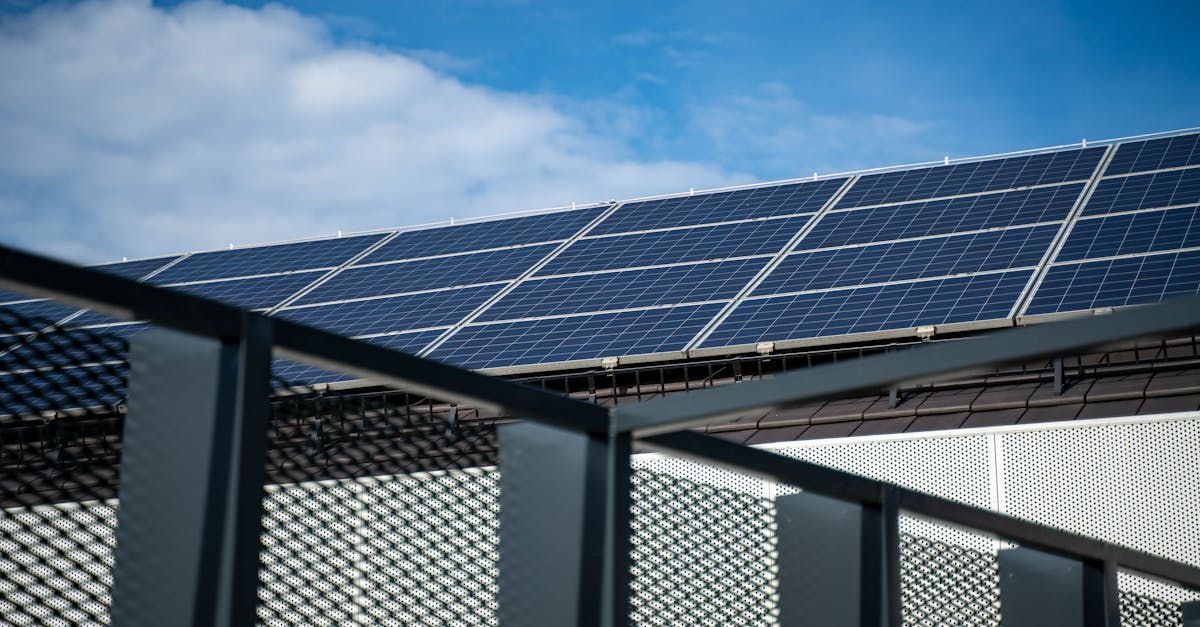
Monofacial panels are the standard solar panels you see on most rooftops. They have solar cells on the front face only, with an opaque backsheet (usually white or black). Light hits the front, generates electricity. Simple, proven, and the dominant technology for rooftop installations.
Key characteristics:
- Single-sided power generation
- Opaque backsheet (white for better temperature performance, black for aesthetics)
- Established manufacturing process with competitive pricing
- Typical efficiency: 20-22% (monocrystalline PERC)
Bifacial Panels
Bifacial panels have solar cells on both sides, with a transparent glass or clear backsheet on the rear. They generate primary power from direct sunlight on the front and additional power from reflected light (albedo) hitting the rear side.
Key characteristics:
- Dual-sided power generation
- Glass-glass construction (more durable, heavier)
- Additional generation depends entirely on ground/surface reflectivity
- Typical front efficiency: 20-22%, rear gain: 5-25% depending on conditions
- Requires elevated mounting to allow light to reach the rear side
The Albedo Factor: Why Your Terrace Surface Matters
Albedo is the measure of how much light a surface reflects. This is the single most important factor determining whether bifacial panels are worth it for your home. A surface with 0% albedo (pure black) reflects nothing — making the rear side of a bifacial panel useless. A surface with 100% albedo (perfect mirror) would reflect all light.
Common Coimbatore Terrace Surfaces
| Surface Type | Albedo (Approximate) | Bifacial Rear Gain | Common In |
|---|---|---|---|
| Red oxide (Kaavi) coating | 15-20% | 3-5% extra generation | Older Coimbatore homes |
| Grey concrete (uncoated) | 20-25% | 4-6% extra generation | Most apartment terraces |
| White cement wash | 40-50% | 8-12% extra generation | Some newer buildings |
| White cool roof coating | 50-60% | 10-15% extra generation | Premium buildings, factories |
| Green/dark waterproofing | 10-15% | 2-4% extra generation | Recently waterproofed terraces |
| Bare soil (ground mount) | 15-25% | 3-6% extra generation | Agricultural installations |
For most Coimbatore homes, the terrace is either red oxide or grey concrete, yielding a rear gain of 3-6%. This is significantly lower than the "up to 25%" figure often cited in bifacial panel marketing, which assumes high-albedo surfaces like white sand or snow.
The Mounting Height Requirement
Bifacial panels need elevated mounting to allow reflected light to reach the rear side. Standard rooftop mounting at 6-8 inches above the surface provides almost no rear gain because there is insufficient space for reflected light to reach the back of the panel.
Mounting Height vs. Rear Gain
| Mounting Height | Approximate Rear Gain (grey concrete) | Additional Structure Cost (5 kW) |
|---|---|---|
| Standard (15-20 cm) | 1-2% (negligible) | None |
| Elevated (50-60 cm) | 3-5% | Rs 5,000-8,000 |
| High elevation (100+ cm) | 5-8% | Rs 12,000-18,000 |
For meaningful bifacial gain on a Coimbatore terrace, you need a minimum elevation of 50-60 cm, which adds Rs 5,000-8,000 to the mounting structure cost for a 5 kW system.
Cost Comparison: 5 kW System in Coimbatore
Let us compare the real costs for a typical 5 kW residential installation in Coimbatore:
Monofacial System (5 kW)
| Component | Cost |
|---|---|
| Monofacial panels (540W x 10, Tier-1) | Rs 1,20,000-1,35,000 |
| Inverter (5 kW string) | Rs 18,000-35,000 |
| Mounting structure (standard) | Rs 18,000-22,000 |
| Wiring, accessories, installation | Rs 15,000-20,000 |
| Total before subsidy | Rs 1,71,000-2,12,000 |
| PM Surya Ghar subsidy | Rs -78,000 |
| Net cost | Rs 93,000-1,34,000 |
Bifacial System (5 kW)
| Component | Cost |
|---|---|
| Bifacial panels (540W x 10, Tier-1) | Rs 1,35,000-1,55,000 |
| Inverter (5 kW string) | Rs 18,000-35,000 |
| Mounting structure (elevated, 60 cm) | Rs 25,000-30,000 |
| Wiring, accessories, installation | Rs 15,000-20,000 |
| Total before subsidy | Rs 1,93,000-2,40,000 |
| PM Surya Ghar subsidy | Rs -78,000 |
| Net cost | Rs 1,15,000-1,62,000 |
The Extra Investment
The bifacial system costs approximately Rs 22,000-28,000 more than the monofacial system (after subsidy), accounting for both the panel premium and the elevated mounting structure.
Generation Comparison: Annual kWh
Coimbatore receives approximately 5.0-5.3 peak sun hours daily (annual average). For a 5 kW system:
Monofacial 5 kW
- Daily generation: 20-22 kWh (average)
- Annual generation: 7,300-8,000 kWh
- Over 25 years: 1,72,000-1,88,000 kWh (with 0.5% annual degradation)
Bifacial 5 kW (Grey Concrete Terrace, 60 cm Elevation)
- Daily generation: 21-23.5 kWh (average, with 5% rear gain)
- Annual generation: 7,665-8,400 kWh
- Over 25 years: 1,80,600-1,97,400 kWh (with 0.5% annual degradation)
Additional Generation from Bifacial
- Annual extra generation: 365-400 kWh
- 25-year extra generation: 8,600-9,400 kWh
- Monetary value of extra generation (at Rs 5/kWh average over 25 years): Rs 43,000-47,000
ROI Comparison
| Factor | Monofacial 5 kW | Bifacial 5 kW |
|---|---|---|
| Net cost (after subsidy) | Rs 1,13,000 (average) | Rs 1,38,000 (average) |
| Annual generation | 7,650 kWh | 8,030 kWh |
| Annual savings (at Rs 6/unit avg) | Rs 45,900 | Rs 48,180 |
| Simple payback period | 2.5 years | 2.9 years |
| 10-year savings (with 4% tariff inflation) | Rs 5,51,000 | Rs 5,78,000 |
| 10-year ROI | 388% | 319% |
| 25-year savings | Rs 19,80,000 | Rs 20,79,000 |
| 25-year ROI | 1,652% | 1,406% |
Key observation: The monofacial system has a better ROI percentage because the extra cost of bifacial is not fully compensated by the modest 5% generation gain on a grey concrete terrace. The bifacial system generates more total savings in absolute terms (Rs 99,000 more over 25 years), but the extra investment of Rs 25,000 takes longer to justify.
The Payback Math: When Does the Extra Cost Justify Itself?
The extra investment of Rs 25,000 for bifacial (on a grey concrete terrace) generates approximately Rs 2,280 more per year in savings.
Payback of the bifacial premium alone: Rs 25,000 / Rs 2,280 = 11 years
This means you wait 11 years to recover the additional money you spent on bifacial versus monofacial. After that, you benefit from the extra generation for the remaining 14 years.
However, if you have a white-washed or cool-roof coated terrace (50% albedo):
- Rear gain increases to 10-12%
- Extra annual generation: 750-960 kWh
- Extra annual savings: Rs 4,500-5,760
- Payback of bifacial premium: 4.3-5.5 years — much more reasonable
Practical Recommendation for Coimbatore Homes
Bifacial is NOT worth the extra cost if:
- Your terrace is red oxide or dark-colored (low albedo)
- Your mounting space only allows standard-height structures
- Budget optimization is your primary goal
- Your terrace is covered with existing structures that limit ground reflection
Bifacial IS worth the extra cost if:
- Your terrace is white-washed or has a cool-roof coating (high albedo)
- You are installing a cool-roof coating anyway (combined investment makes sense)
- You have ground-mount space with light-colored gravel or concrete
- You want the durability advantage of glass-glass construction (bifacial panels are inherently more durable)
- You are installing an elevated structure anyway (carport, elevated walkway)
The Smart Compromise
If you want bifacial benefits without the full premium, consider:
- Apply white cool-roof coating to your terrace (Rs 30-50 per sq ft) — this reduces terrace heat, improves building cooling, AND increases bifacial rear gain to 10-15%
- Combined cost of cool-roof coating + bifacial panels may be offset by both solar generation gain AND reduced AC electricity consumption
When Bifacial is Clearly the Better Choice
Bifacial panels truly shine in specific installation types:
Ground Mount Systems
When panels are elevated 1-2 meters above light-colored ground (gravel, white concrete), rear gains of 10-20% are achievable. For agricultural or open-land installations in Coimbatore's outskirts, bifacial is often worth it.
Solar Carports
Elevated mounting is inherent in carport design. Light-colored parking surfaces (concrete, light tiles) provide good albedo. Bifacial carports can generate 12-18% more than monofacial equivalents.
Elevated Commercial Structures
Factory roofs with light-colored sheet metal, elevated walkway installations, or pergola-style mounting all provide natural conditions for bifacial gain.
Vertical Installations (East-West Facing)
Bifacial panels mounted vertically on building facades or fences capture morning and evening sun from both sides. This niche application is growing in commercial settings.
Durability Advantage: An Often-Overlooked Benefit
Beyond generation, bifacial panels (glass-glass construction) offer a practical durability advantage:
- No backsheet degradation: Standard panels use polymer backsheets that can degrade, crack, or yellow over time. Glass-glass eliminates this failure mode.
- Better moisture resistance: Glass-glass construction prevents moisture ingress better than glass-polymer
- Mechanical strength: Glass-glass panels handle wind loads and thermal cycling better
- Longer actual lifespan: Many manufacturers rate glass-glass panels for 30+ years vs 25 for glass-polymer
If you plan to keep your system for 25+ years (most people do), the durability factor adds value independent of the generation gain.
The Bottom Line
For a typical Coimbatore home with a grey concrete or red oxide terrace, monofacial panels offer better value for money. The 5% rear gain from bifacial panels on a standard terrace does not justify the 15-20% cost premium.
However, if you can combine bifacial panels with a white cool-roof coating or if your installation involves elevated structures (carport, ground mount), bifacial panels become a compelling choice with payback periods under 5 years.
The decision is ultimately about your specific terrace surface, mounting options, and budget priorities. A good installer should assess these factors and give you an honest recommendation — not just push the higher-margin option.
Want a site-specific analysis for your Coimbatore home? Contact Tristar for a free assessment that evaluates your terrace surface, shading, and the realistic generation gain from bifacial vs. monofacial for your specific situation. Or start with our calculator to estimate your baseline system size and savings.
Ready to Go Solar?
Get a personalized solar quote based on your electricity consumption and roof area.
Related Articles
Tristar vs Avon Power Systems | Vadavalli Solar
Vadavalli homeowners exploring solar have multiple local options. This fair comparison between Tristar Energy and Avon Power Systems covers residential specialization, system design for independent houses, aesthetic considerations, and maintenance support for this premium Coimbatore neighbourhood.
Tristar vs CR Engineering & Advent Technologies
A three-way comparison of Coimbatore's established local solar companies — Tristar Energy, C R Engineering, and Advent Technologies. Compare focus areas, certifications, system sizes, and service coverage to find the best fit for your project.
Tristar vs Jai Sunlight Systems | Coimbatore Solar
Comparing two active Coimbatore solar installers — Tristar Energy and Jai Sunlight Systems — across experience, certifications, service coverage, warranty packages, and TANGEDCO processing to help you choose the right solar partner.