On This Page
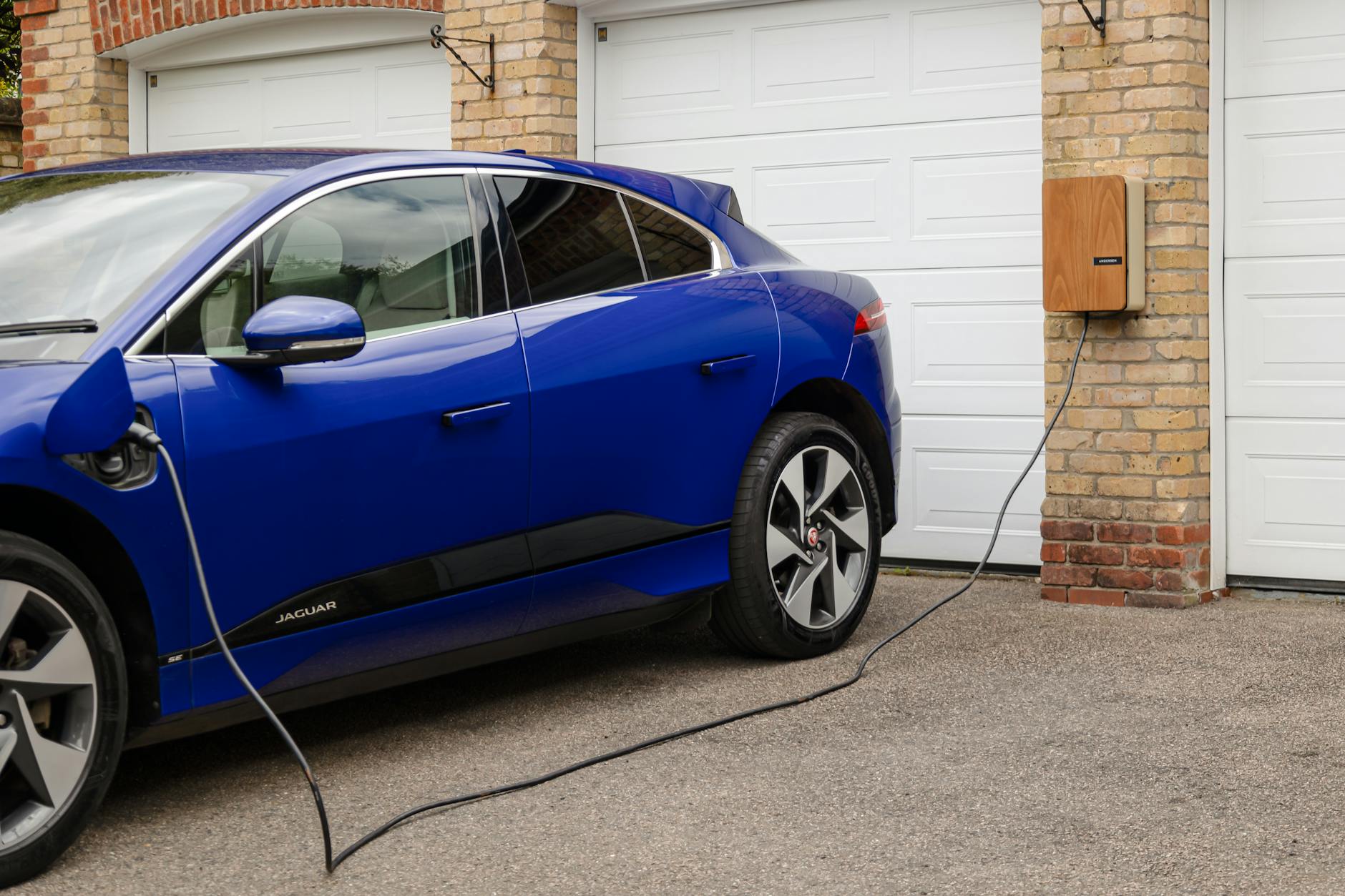
Imagine this scenario: it is 7 PM on a hot summer evening in Chennai, TANGEDCO announces a scheduled maintenance power cut for four hours, and while your neighbors fire up their diesel generators or sit in the dark with phone flashlights, your home continues running — lights, fans, refrigerator, WiFi — powered silently by the 40 kWh battery sitting in your driveway. That battery is your electric car.
This is the promise of V2H — Vehicle-to-Home — technology. It turns your electric vehicle into a massive home battery that charges from solar during the day and powers your home during power cuts, peak tariff hours, or at night. And while V2H is not yet widely available in India, the technology is maturing globally, and Indian deployment is expected between 2027 and 2028.
For solar system owners in Tamil Nadu, V2H could eliminate the need for a separate home battery system entirely — saving ₹5-10 lakh while providing superior backup capacity.
What Exactly Is V2H?
V2H stands for Vehicle-to-Home. It is a subset of V2X (Vehicle-to-Everything) technology that allows electric vehicles to discharge their battery back into your home's electrical system.
In a standard EV setup, electricity flows in one direction: grid or solar charges the EV. The charger is unidirectional.
In a V2H setup, electricity flows both ways: your solar system (or grid) charges the EV during the day, and the EV can discharge power back into your home when needed. This requires a bidirectional charger — a device that can both charge and discharge the EV battery through your home's electrical panel.
The Complete V2H Energy Flow
- Morning to afternoon: Your rooftop solar system generates electricity. Excess solar (beyond home consumption) charges your EV.
- Evening peak hours (5 PM - 9 PM): Solar generation drops. Your EV battery discharges through the bidirectional charger, powering your home's evening loads.
- During power cuts: The bidirectional charger switches to backup mode, isolating your home from the grid and powering essential circuits from the EV battery.
- Night: If the EV battery still has sufficient charge, it can power your home's overnight baseload (refrigerator, WiFi router, security cameras).
- Next morning: The cycle repeats — solar recharges the EV.
The Numbers: How Much Backup Can Your EV Provide?
The average Indian household consumes 8-15 kWh per day. Let us see how different EV batteries stack up as home backup sources:
| Electric Vehicle | Battery Capacity | Usable for V2H (80%) | Hours of Home Backup | Days of Backup |
|---|---|---|---|---|
| Tata Nexon EV (long range) | 40.5 kWh | 32.4 kWh | 26-40 hours | 1-2 days |
| MG ZS EV | 50.3 kWh | 40.2 kWh | 32-50 hours | 1.5-2.5 days |
| Hyundai Ioniq 5 | 72.6 kWh | 58.1 kWh | 46-73 hours | 2-3.5 days |
| BYD Atto 3 | 60.5 kWh | 48.4 kWh | 39-60 hours | 2-3 days |
| Tata Punch EV (long range) | 35 kWh | 28 kWh | 22-35 hours | 1-1.7 days |
| Mahindra XEV 9e | 59 kWh | 47.2 kWh | 38-59 hours | 1.8-3 days |
Note: "Usable for V2H (80%)" assumes you reserve 20% of the battery for driving needs. Most V2H systems let you set a minimum battery threshold — you would not want to completely drain your car battery and be unable to drive.
A typical Tamil Nadu household consuming 10-12 kWh/day could run for 2-4 days on a mid-range EV battery. Compare this to a typical home battery system (5-10 kWh) that provides 8-20 hours of backup. Your EV battery is 4-6 times larger than any home battery you would reasonably purchase.
Current V2H-Capable EVs
Not all EVs support bidirectional charging. The vehicle's onboard electronics must be designed to allow power to flow back out of the battery. As of early 2026, the V2H landscape looks like this:
Globally Available V2H-Capable EVs
- Nissan Leaf (V2H pioneer, available since 2012 in Japan)
- Hyundai Ioniq 5 (V2H/V2L capable, sold in India)
- Kia EV6 (V2H/V2L capable)
- Ford F-150 Lightning (V2H capable, US market)
- BYD models (V2H hardware ready, software updates rolling out)
India Status
Currently, no Indian EV ecosystem supports full V2H functionality. The reasons:
- Bidirectional chargers are not yet commercially available in India
- Grid regulations for V2H have not been finalized by state electricity regulatory commissions
- EV warranties in India do not yet explicitly cover V2H cycling
- Communication protocols between Indian grid infrastructure and V2H systems need standardization
However, several EVs sold in India have the hardware capability for V2H — notably the Hyundai Ioniq 5 (which supports V2L, Vehicle-to-Load, through its standard outlet) and upcoming models from BYD, Mahindra, and Tata that are being designed with bidirectional capability.
Expected India timeline: Industry experts anticipate commercial V2H solutions becoming available in India between 2027 and 2028, initially in metro cities with stable grid infrastructure.
The Complete Solar + EV + V2H Setup
Here is what a future-ready home energy system looks like:
Components Required
| Component | Purpose | Estimated Cost (2027-28) |
|---|---|---|
| Rooftop solar system (5-10kW) | Generates clean electricity | ₹2,00,000-4,50,000 (after subsidy) |
| Bidirectional EV charger | Charges EV and discharges to home | ₹1,50,000-3,00,000 (estimated) |
| Smart energy management system | Controls power flow between solar, EV, home, grid | ₹30,000-60,000 |
| EV with V2H capability | The battery on wheels | Vehicle cost (already purchased) |
| Electrical panel upgrades | Transfer switch, load management | ₹20,000-40,000 |
| Total V2H add-on cost | (Excluding solar and EV) | ₹2,00,000-4,00,000 |
How the System Operates Daily
6 AM - 9 AM: Low solar generation. Home runs on grid power. EV is parked (not charging yet — solar output is too low).
9 AM - 4 PM: Peak solar generation. Solar powers the home directly. Excess solar charges the EV. If the EV is fully charged, excess is exported to the grid for net metering credits.
4 PM - 9 PM: Solar generation drops. The smart energy management system switches the home to EV battery power. Your evening cooking, TV, lights, and fans run from the EV. Grid is used only if EV battery drops below your set threshold.
9 PM - 6 AM: Home's overnight baseload (refrigerator, WiFi, security) runs from the EV battery. A typical overnight baseload of 0.5-1 kW consumes 4-8 kWh — a small fraction of most EV batteries.
During power cuts: The system disconnects from the grid (anti-islanding) and powers your home entirely from the EV battery. No diesel generator noise, no fumes, no fuel cost.
V2H vs. Dedicated Home Battery: Cost Comparison
This is where V2H gets really compelling:
| Parameter | Dedicated Home Battery | V2H (Using EV Battery) |
|---|---|---|
| Battery capacity | 5-10 kWh (typical) | 35-70 kWh (typical EV) |
| Battery cost | ₹5,00,000-10,00,000 | ₹0 (already in your EV) |
| Additional hardware needed | Battery + hybrid inverter | Bidirectional charger only |
| Hardware cost | Included in battery system | ₹2,00,000-3,00,000 |
| Backup duration | 8-20 hours | 1-3 days |
| Battery warranty | 10 years | 8 years / 1,60,000 km (EV warranty) |
| Space required | Wall-mounted or floor unit | None (EV is in your parking) |
| Ongoing cost | Battery replacement at end of life | None (replaced with EV) |
| Total cost for backup | ₹5,00,000-10,00,000 | ₹2,00,000-3,00,000 |
The math is clear: if you already own (or plan to own) an EV, V2H provides 3-7 times more backup capacity at a fraction of the cost of a dedicated home battery. The EV battery — which you purchased for transportation — doubles as your home energy storage system.
Tamil Nadu Power Cut Scenario: V2H in Action
Let us model a realistic Tamil Nadu scenario:
Situation: Summer in Chennai. TANGEDCO announces a 6-hour scheduled power cut from 10 AM to 4 PM (common during peak demand months). Your home has a 5kW solar system and a Hyundai Ioniq 5 (72.6 kWh battery) with V2H.
Without V2H: Your solar system shuts down during the power cut (grid-tied inverters require grid presence to operate, unless you have a hybrid inverter). You sit without power for 6 hours. Your solar generation for those 6 peak hours — approximately 25 kWh worth of electricity — is completely wasted.
With V2H: The bidirectional charger detects the power cut and switches to island mode. Your solar system continues generating (through the V2H system acting as a grid-forming source), powering your home and charging the EV simultaneously. You do not notice the power cut at all. Those 25 kWh of solar generation are captured instead of wasted.
Annual impact: If Tamil Nadu experiences 50-100 hours of power cuts per year in urban areas (and significantly more in semi-urban/rural areas), a V2H system prevents the loss of 200-500 kWh of solar generation annually — worth ₹1,200-3,000 in electricity savings, plus the immeasurable comfort of uninterrupted power.
Challenges and Concerns
Battery Degradation
The primary concern with V2H is additional cycling of the EV battery. Every charge-discharge cycle causes microscopic degradation. However, the impact is smaller than many fear:
- A typical EV battery is rated for 1,500-3,000 full cycles
- V2H typically uses only 10-30% of the battery per day (not a full cycle)
- At 10-30% depth of discharge daily, V2H adds only 36-110 equivalent full cycles per year
- Over 10 years, this represents 360-1,100 additional cycles — well within the battery's rated lifespan
- Modern LFP batteries (used in many newer EVs) handle even more cycles with minimal degradation
Warranty Concerns
Current EV warranties in India do not explicitly address V2H usage. This is expected to change as V2H becomes commercially available. Globally, Nissan, Hyundai, and Ford have already clarified that V2H usage does not void their EV battery warranties.
Grid Regulations
V2H requires clear regulations around:
- Anti-islanding protection (ensuring your V2H system does not backfeed into the grid during maintenance)
- Net metering implications (can V2H-discharged power be exported to the grid for credits?)
- Safety standards for bidirectional chargers
India's Central Electricity Authority and state regulators (TNERC in Tamil Nadu) are working on V2X regulations, expected to be finalized by 2027.
Should You Wait for V2H or Buy Battery Storage Now?
This depends on your current situation:
Wait for V2H If:
- You already own or plan to buy an EV within 2-3 years
- Your power cuts are infrequent (less than 50 hours/year)
- You have a grid-connected solar system with net metering (no urgent backup need)
- You are comfortable waiting 2-3 years for the technology to become available in India
Buy Battery Storage Now If:
- You experience frequent or long power cuts (more than 100 hours/year)
- You do not plan to buy an EV in the near future
- You need backup power for medical equipment, home office, or business-critical needs
- You want energy independence today, not in 2-3 years
The Pragmatic Middle Ground
Install a grid-connected solar system now — it provides immediate ROI through net metering savings with zero battery cost. When V2H becomes available in India (2027-2028), you can add a bidirectional charger to your existing solar system and EV. This staged approach gives you immediate solar savings today and V2H backup capability in the future.
Tristar's Future-Ready Solar Approach
At Tristar, we design every solar installation with future technology in mind. Our current practices include:
- Hybrid-ready inverter selection: We recommend inverters that can be upgraded to support battery and V2H integration later
- Electrical panel preparation: We install transfer switches and breaker positions that accommodate future bidirectional charger connections
- Conduit provisioning: We run empty conduits from the solar array to the parking area for future EV charger and V2H wiring
- Smart metering: We install energy meters that can track bidirectional power flow
This means when V2H becomes available in India, your Tristar solar installation will need minimal modifications to integrate — saving you time and money on future upgrades.
Get Started with Future-Ready Solar
The best time to install solar is now — every month of delay is a month of lost savings. Use our Solar Savings Calculator to see your potential returns, or contact Tristar to discuss a future-ready solar design that will seamlessly integrate with V2H technology when it arrives.
Ready to Go Solar?
Get a personalized solar quote based on your electricity consumption and roof area.
Related Articles
Solid-State Batteries in 2026: Should You Wait to Buy Solar Storage?
Solid-state batteries promise 2x energy density, zero fire risk, and longer life. But they are years away from home storage. Should you wait or buy LFP batteries today?
Your Carbon Footprint: How Solar Reduces CO2 Emissions in Tamil Nadu
Discover how switching to solar energy in Tamil Nadu can dramatically cut your carbon footprint — with real numbers on CO2 savings for homes, businesses, and industries across the state.
Does Solar Work During Tamil Nadu's Rainy Season? Real Data Inside
Tamil Nadu gets two monsoons — northeast and southwest. Here's exactly how much solar power you can expect during the rainy months, backed by real generation data.