On This Page
Cold storage is the backbone of Tamil Nadu's agricultural economy. From Thanjavur's rice mills to Erode's turmeric warehouses, Dindigul's banana ripening chambers to Theni's grape cold stores, the post-harvest supply chain depends on continuous refrigeration. And continuous refrigeration means continuous electricity — 24 hours a day, 365 days a year.
For most cold storage operators, electricity is the single largest operating expense after raw material procurement. Annual electricity bills of ₹15-30 lakh are common for medium-sized facilities, and in power-cut-prone rural areas, the additional diesel generator cost pushes energy expenses even higher.
Solar energy is uniquely suited to cold storage operations. The load profile, the consistent year-round demand, and the availability of rooftop and ground space all align perfectly with solar generation characteristics. The result is one of the highest-ROI solar applications in the agricultural sector.
Cold Storage Electricity Consumption: Understanding the Numbers
A cold storage facility's electricity consumption is driven primarily by compressor operation, which accounts for 60-70% of total energy use. The remaining 30-40% goes to evaporators, lighting, material handling, and ancillary systems.
Typical Energy Consumption by Facility Size
| Facility Type | Storage Capacity | Connected Load | Monthly Consumption | Annual Electricity Bill |
|---|---|---|---|---|
| Small cold room | 50-100 MT | 30-50 kW | 15,000-25,000 kWh | ₹8-15 lakh |
| Medium cold storage | 200-500 MT | 80-150 kW | 40,000-75,000 kWh | ₹15-30 lakh |
| Large cold storage | 1,000-2,000 MT | 200-400 kW | 1,00,000-2,00,000 kWh | ₹40-80 lakh |
| Multi-chamber facility | 2,000-5,000 MT | 400-800 kW | 2,00,000-4,00,000 kWh | ₹80 lakh-1.6 crore |
At TANGEDCO's commercial/industrial tariff rates of ₹7-8 per unit (including fixed charges and demand charges), these electricity costs represent a significant portion of the cold storage operator's margin.
Why Daytime Load is Highest
Cold storage compressors work hardest during daytime hours because:
- Ambient temperature peaks between 11 AM and 4 PM, increasing the thermal load on the facility
- Door openings for loading/unloading typically occur during business hours (8 AM - 6 PM)
- Product intake (freshly harvested produce at ambient temperature) happens during the day
This daytime peak perfectly coincides with peak solar generation — making cold storage one of the most natural applications for solar energy.
Why Cold Storage is Ideal for Solar
Several characteristics make cold storage facilities exceptionally well-suited for solar installations:
1. High and Consistent Daytime Load
Unlike factories that may have seasonal production cycles, cold storage operates 24/7 with consistent demand. The daytime load (when solar generates) is actually higher than nighttime load, meaning solar directly offsets the most expensive operating hours.
2. Year-Round Operation
Cold storage does not have "off seasons." Whether it is mango season (April-June), grape harvest (January-March), or rice storage (year-round), the facility runs continuously. This means your solar system generates returns every single day of the year.
3. Large Roof and Ground Area
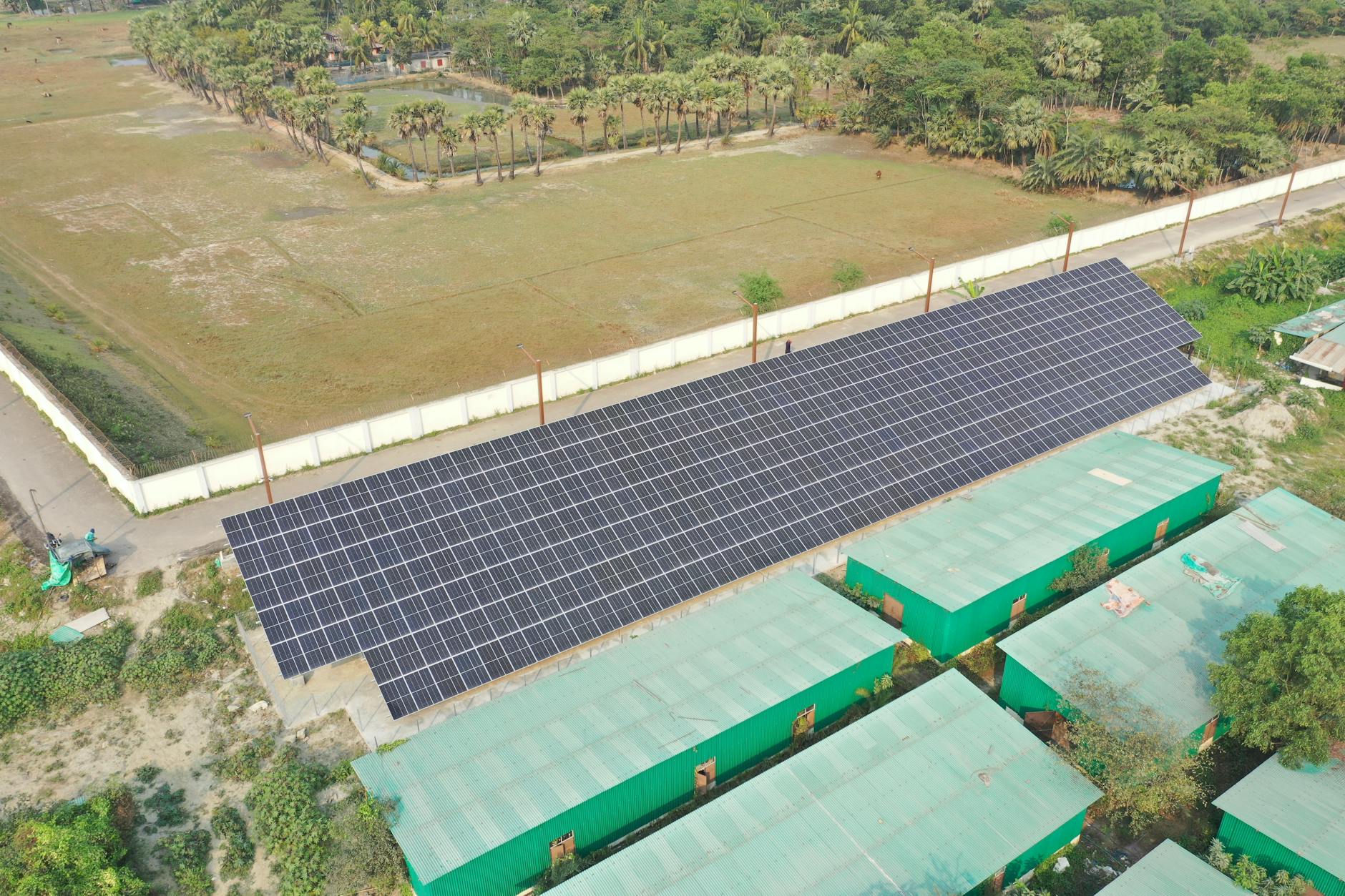
Cold storage buildings typically have large, flat rooftops — ideal for solar panel installation. Many facilities also have surrounding land that can be used for ground-mounted systems if roof space is insufficient.
4. Rural Location with Better Solar Irradiance
Most cold storage facilities in Tamil Nadu are located in rural or semi-urban areas, which typically have:
- Less air pollution and dust, resulting in higher solar irradiance
- Fewer shading obstacles (tall buildings)
- More available land for ground-mounted systems
- Higher solar hours due to less urban heat island effect
5. Predictable Load Profile
Cold storage load is highly predictable — it does not vary significantly from day to day. This makes solar system sizing straightforward and ensures consistent, reliable savings.
System Sizing for Cold Storage
Recommended Solar System Sizes
| Cold Storage Size | Recommended Solar | Expected Daytime Offset | Estimated Monthly Savings |
|---|---|---|---|
| 50-100 MT | 30-50 kW | 70-80% | ₹40,000-70,000 |
| 200-500 MT | 80-150 kW | 70-80% | ₹1,00,000-2,00,000 |
| 1,000-2,000 MT | 200-350 kW | 65-75% | ₹2,50,000-5,00,000 |
| 2,000-5,000 MT | 400-700 kW | 60-70% | ₹5,00,000-10,00,000 |
The sizing targets 70-80% of daytime grid consumption. We do not recommend 100% offset because cloud cover and seasonal variations mean the grid must supplement during low-generation periods.
Solar + Grid: The Standard Configuration
For cold storage facilities with reliable grid supply (fewer than 2-3 hours of power cuts per day), the standard configuration is:
Solar + Grid with Net Metering
- During sunny hours: Solar feeds the compressors and facility load directly
- If solar exceeds load: Excess power is exported to the grid for credits
- During cloudy periods or nighttime: Grid supplies the deficit
- Net metering ensures: Every unit of solar generated either reduces your bill or earns a credit
This is the simplest and most cost-effective configuration, with no battery storage required.
Solar + Battery: For Power-Cut-Prone Rural Areas
Many cold storage facilities in rural Tamil Nadu face 4-8 hours of daily power cuts. For these locations, a diesel generator is the current backup, adding ₹2-5 lakh per month in fuel costs.
A solar + battery hybrid system can significantly reduce or eliminate diesel dependency:
How It Works
- Daytime with grid available: Solar powers the load, excess charges batteries
- Daytime power cut: Solar + battery powers the load (genset stays off)
- Nighttime with grid available: Grid powers the load, batteries on standby
- Nighttime power cut: Battery powers the load for 2-4 hours; genset starts only for extended outages
Battery Sizing for Cold Storage
| Backup Duration | Battery Capacity (for 100 kW load) | Approximate Cost |
|---|---|---|
| 1 hour | 100 kWh lithium-ion | ₹12-15 lakh |
| 2 hours | 200 kWh lithium-ion | ₹22-28 lakh |
| 4 hours | 400 kWh lithium-ion | ₹40-50 lakh |
Battery costs have dropped significantly and continue to decline. For cold storage in areas with frequent but short power cuts (1-2 hours), a 2-hour battery backup often eliminates 80-90% of genset usage.
Districts with Maximum Cold Storage Demand
Tamil Nadu's agricultural diversity creates cold storage demand across the state, but certain districts have particularly high concentrations:
Thanjavur and the Cauvery Delta (Rice, Paddy)
The Cauvery delta region — Thanjavur, Nagapattinam, Tiruvarur — is Tamil Nadu's rice bowl. Cold storage here serves rice mills and paddy storage. Facilities range from 500-2,000 MT, with annual electricity consumption of ₹20-50 lakh.
Erode (Turmeric, Coconut)
Erode is India's largest turmeric market. Cold storage and controlled atmosphere storage for turmeric, coconut, and other spices is a major industry. The district's moderate climate and good solar irradiance (5.2-5.5 kWh/m2/day) make it ideal for solar installations.
Dindigul (Banana, Fruits)
Dindigul district handles a massive volume of bananas and other fruits requiring ripening chambers and cold storage. The post-harvest loss reduction from reliable cold storage makes solar particularly valuable — every hour of uninterrupted refrigeration saves produce worth lakhs.
Theni (Grapes, Fruits)
Theni district, particularly the Cumbum valley, is a major grape-growing region. Grape cold storage requires precise temperature control (0-2 degree C), making uninterrupted power supply critical. Solar + battery systems provide the reliability these high-value crops demand.
Other Key Districts
- Salem: Mangoes, tomatoes, and vegetables
- Krishnagiri: Mangoes and tomatoes (Hosur-Denkanikottai belt)
- Thoothukudi and Kanyakumari: Seafood cold storage
- Nilgiris: Vegetables and tea processing
PM-KUSUM Component A: Solar on Cold Storage Rooftops
The PM-KUSUM (Pradhan Mantri Kisan Urja Suraksha evam Utthaan Mahabhiyan) scheme has a component specifically relevant to agri-businesses:
Component A: Decentralized Ground-Mounted/Rooftop Solar Plants
- Capacity: Up to 2 MW per site
- Subsidy: CFA (Central Financial Assistance) available for eligible installations
- Who can apply: Farmers, farmer groups, cooperatives, and agri-businesses
- Power purchase: TANGEDCO purchases the generated electricity at a pre-determined tariff
How Cold Storage Operators Can Benefit
- Install solar on the cold storage rooftop or adjacent land
- Use solar power for self-consumption (reduce electricity bill)
- Sell excess power to TANGEDCO under PM-KUSUM
- Benefit from CFA subsidies that reduce the capital cost
Contact your district TEDA office or the MNRE PM-KUSUM portal for current subsidy rates and application procedures.
Subsidy and Financing Options
Central Government Subsidies
- PM Surya Ghar Muft Bijli Yojana: Applicable for cold storage units with domestic connections (rare but applicable for farm-attached cold rooms)
- PM-KUSUM Component A: For agricultural installations including cold storage
- MNRE Subsidy for Commercial/Industrial: Available through TEDA for eligible installations
State-Level Support
- TEDA incentives: Tamil Nadu-specific subsidies through the Tamil Nadu Energy Development Agency
- Priority sector lending: Banks classify solar installations under priority sector, improving loan terms
Financing Options
| Option | Interest Rate | Tenure | Down Payment |
|---|---|---|---|
| Bank term loan | 8-10% p.a. | 7-10 years | 20-30% |
| NABARD refinance | 7-9% p.a. | 7-10 years | 15-25% |
| Solar-specific NBFC | 9-12% p.a. | 5-7 years | 10-20% |
| Equipment lease (OPEX model) | N/A | 15-25 years | Zero |
The OPEX (operational expenditure) model is particularly attractive for cold storage operators who want to avoid upfront capital investment. Under this model, a solar developer installs the system at zero cost, and you pay only for the solar electricity consumed — at a rate 20-30% below TANGEDCO's tariff.
ROI Calculation: 100kW System for a Medium Cold Storage
Facility Profile
| Parameter | Value |
|---|---|
| Cold storage capacity | 300 MT |
| Location | Erode district |
| Connected load | 120 kW |
| Monthly electricity consumption | 55,000 kWh |
| Current monthly bill | ₹4,12,500 (at ₹7.50/unit avg) |
| Annual electricity cost | ₹49,50,000 |
Solar System Design
| Component | Specification | Cost |
|---|---|---|
| Solar panels | 100 kW, DCR/ALMM listed | ₹35,00,000 |
| Inverter | 100 kW string inverter | ₹4,50,000 |
| Mounting structure | Hot-dip galvanized | ₹3,50,000 |
| Electrical (cables, earthing, DB) | Complete | ₹2,00,000 |
| Net metering | TANGEDCO application + meter | ₹75,000 |
| Total cost | ₹45,75,000 |
Financial Returns
| Metric | Value |
|---|---|
| Annual solar generation | 1,48,000 kWh |
| Daytime consumption offset | 70-75% |
| Annual electricity savings | ₹11,10,000 |
| Annual genset savings (diesel avoided) | ₹2,40,000 |
| Total annual savings | ₹13,50,000 |
| Simple payback period | 3.4 years |
| 25-year net savings | ₹2.92 crore |
Tax Benefits: Accelerated Depreciation and GST
40% Accelerated Depreciation (AD)
Industrial and commercial solar installations qualify for 40% accelerated depreciation under the Income Tax Act. For our 100kW example:
| Parameter | Value |
|---|---|
| System cost | ₹45,75,000 |
| 40% AD in Year 1 | ₹18,30,000 |
| Tax bracket (assume 30%) | 30% |
| Tax savings | ₹5,49,000 |
This tax benefit effectively reduces the net investment to approximately ₹40 lakh and brings the payback period down to under 3 years.
GST Input Tax Credit
If your cold storage business is GST-registered, you can claim input tax credit on the GST paid on the solar system (currently 12% on panels and 18% on other components, with an effective rate of approximately 13.8%). This further reduces the effective cost by approximately ₹5-6 lakh.
Cold Chain Supply: Farm to Market with Solar
Solar-powered cold storage is not just about saving electricity costs — it is a critical link in building a reliable cold chain from farm to market.
The Cold Chain Challenge in Tamil Nadu
India loses an estimated ₹92,000 crore worth of agricultural produce annually due to inadequate cold chain infrastructure. Tamil Nadu, despite being a major agricultural state, has significant gaps in rural cold storage capacity.
How Solar Addresses the Gap
- Location flexibility: Solar-powered cold storage can be set up in remote rural areas without dependence on reliable grid supply
- Operating cost reduction: Lower electricity costs make cold storage viable in smaller towns and villages where margins are thin
- Farmer income improvement: Farmers can store produce and sell when prices are favorable, rather than distress-selling at harvest
- Food waste reduction: Reliable refrigeration reduces post-harvest losses from 25-30% to under 5%
The Emerging Model: Solar-Powered Pack Houses
A growing trend in Tamil Nadu is the solar-powered pack house — a facility that combines sorting, grading, pre-cooling, and cold storage under one roof, powered primarily by solar energy. These facilities serve as aggregation points for farmer producer organisations (FPOs) and directly connect farmers to organized retail and export markets.
Getting Started
If you operate a cold storage facility in Tamil Nadu, solar is not a question of "if" but "when" — and every month of delay costs you money.
- Estimate your savings: Use our Solar Calculator with your monthly electricity consumption to see the potential
- Schedule a site assessment: Our engineers will evaluate your roof space, load profile, and grid conditions to design an optimised system
- Explore financing options: We can connect you with NABARD, banks, and OPEX providers for zero or low upfront cost options
Contact Tristar for a free cold storage energy assessment — we will analyse your electricity bills, genset usage, and load profile to show you exactly how much you can save.
Tristar Green Energy Solutions has installed solar systems for cold storage and food processing facilities across Tamil Nadu. We understand the unique requirements of agricultural businesses — from precise load matching to backup power design for power-cut-prone rural areas. With 500+ installations since 2013, we deliver reliable solar solutions that protect your produce and your bottom line.
Ready to Go Solar?
Get a personalized solar quote based on your electricity consumption and roof area.
Related Articles
On-Grid vs Hybrid Solar ROI | Rural Tamil Nadu
A practical ROI comparison of on-grid and hybrid solar systems for rural Tamil Nadu areas with frequent power cuts — covering battery costs, revenue loss calculations, and area-wise recommendations.
Solar for Bakeries and Food Processing Units in Tamil Nadu
Discover how bakeries and food processing units across Tamil Nadu are using solar energy to power ovens, refrigeration, and packaging lines while reducing operational costs and carbon footprint.
Solar for Warehouses and Logistics Centers in Tamil Nadu
Discover how warehouses and logistics centres in Tamil Nadu are harnessing their vast roof spaces for solar power, reducing energy costs for lighting, ventilation, and cold storage operations.