On This Page
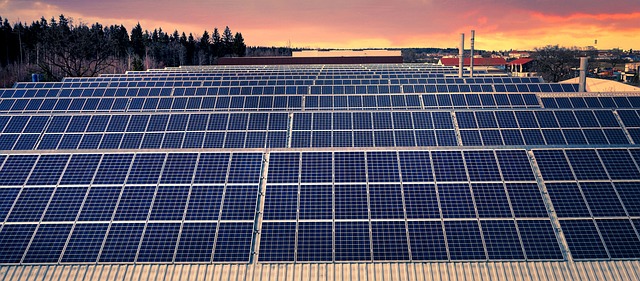
Tamil Nadu's logistics sector is booming. With the state handling a significant share of India's manufacturing output — from automobiles in Chennai to textiles in Tirupur and Coimbatore — warehouses and logistics centers have become critical infrastructure. These facilities share a common feature: vast, flat rooftops that sit idle under the Tamil Nadu sun. That unused real estate represents one of the highest-return solar investment opportunities in the commercial segment.
Warehouses and logistics centers are uniquely suited for solar because their energy consumption patterns align closely with solar generation hours. Lighting, ventilation, conveyor systems, and cold storage compressors all draw peak power during daylight hours — exactly when rooftop solar panels produce electricity. This natural alignment means a well-designed solar system can offset 60-80% of a warehouse's daytime electricity consumption, translating to lakhs of rupees in annual savings.
Tristar Green Energy Solutions has installed solar systems on warehouses and logistics facilities across Tamil Nadu, from the Sriperumbudur-Oragadam industrial corridor near Chennai to the SIDCO estates in Coimbatore. This guide covers everything warehouse operators need to know about going solar.
Why Warehouses Are Ideal for Solar
Massive Roof Area
The average warehouse in Tamil Nadu spans 10,000 to 100,000 sq ft of roof area. Even accounting for skylights, ventilation structures, and setbacks, a typical facility can accommodate a solar system ranging from 50 kW to 500 kW or more. A single large logistics hub along the Chennai-Bangalore highway corridor can support 1 MW+ installations.
For reference, 1 kW of solar requires approximately 100 sq ft of roof area. A modest 20,000 sq ft warehouse roof can host a 150-200 kW system after accounting for walkways and obstructions.
Daytime Energy Consumption
Warehouses operate primarily during the day — receiving shipments, processing inventory, running forklifts, and operating lighting and ventilation systems. This means peak electricity demand coincides with peak solar generation, maximizing self-consumption and minimizing grid dependence.
Flat Roof Advantage
Most warehouses feature flat or low-slope metal roofs (often pre-engineered building structures). These surfaces are ideal for solar panel mounting:
- No complex angles to work around
- Minimal shading from surrounding structures (warehouses are typically in industrial zones with low-rise neighbours)
- Structural load capacity is generally adequate for solar panels (which add only 12-15 kg/sq m)
Energy Consumption Patterns in Logistics Facilities
Understanding where your electricity goes is the first step to sizing a solar system correctly.
| Load Type | Typical Consumption Share | Solar Offset Potential |
|---|---|---|
| Lighting (high-bay LEDs/fluorescents) | 20-30% | 90-100% during daytime |
| Ventilation and exhaust fans | 15-20% | 80-90% |
| Cold storage / refrigeration | 25-40% (if applicable) | 50-70% (runs 24/7) |
| Conveyor systems and material handling | 10-15% | 70-80% |
| Office and admin areas | 5-10% | 80-90% |
| EV charging (forklifts, vehicles) | 5-10% | 60-80% |
Cold Storage Facilities
Cold storage units within logistics centers are the highest energy consumers, running compressors 24 hours a day to maintain temperatures between -20 C and 5 C depending on the product. In Tamil Nadu, cold storage facilities for agricultural produce — mangoes from Krishnagiri, vegetables from Dharmapuri, seafood from the coastal districts — face electricity bills of Rs 3-8 lakh per month.
Solar can offset the daytime portion of this load. Combined with a time-of-use strategy where pre-cooling is maximized during solar generation hours, facilities can reduce their grid consumption by 40-60%.
System Sizing and Cost for Tamil Nadu Warehouses
Recommended System Sizes
| Warehouse Size | Monthly Consumption | Recommended Solar | Estimated Annual Savings |
|---|---|---|---|
| Small (5,000-10,000 sq ft) | 3,000-8,000 units | 25-50 kW | Rs 2-5 lakh |
| Medium (10,000-50,000 sq ft) | 8,000-30,000 units | 50-200 kW | Rs 5-18 lakh |
| Large (50,000-2,00,000 sq ft) | 30,000-1,00,000 units | 200 kW - 1 MW | Rs 18-60 lakh |
| Logistics Park / Hub | 1,00,000+ units | 1-5 MW | Rs 60 lakh - 3 crore |
Cost Estimates (2026)
For commercial and industrial installations in Tamil Nadu, the benchmark cost ranges are:
- 50-100 kW systems: Rs 42,000-48,000 per kW (installed)
- 100-500 kW systems: Rs 38,000-44,000 per kW (economies of scale reduce per-unit cost)
- 500 kW - 1 MW systems: Rs 35,000-40,000 per kW
- Above 1 MW: Rs 32,000-38,000 per kW
These costs include panels, inverters, mounting structures, cabling, installation, TANGEDCO net metering application, and commissioning. GST at 5% concessional rate applies to solar modules and related equipment.
TANGEDCO Tariffs and Savings Calculation
Warehouse and logistics facilities in Tamil Nadu typically operate on HT (High Tension) or LT (Low Tension) industrial/commercial tariff categories:
- LT-3 (Commercial): Rs 7-8 per unit plus fixed charges
- HT-1A (Industrial): Rs 6-7 per unit plus demand charges
- HT-2A (Commercial): Rs 7.50-8.50 per unit plus demand charges
At these tariff rates, every unit of solar electricity generated saves Rs 6-8.50 compared to grid power. A 100 kW system generating approximately 4,00 units per day (or 1,40,000 units per year in Tamil Nadu's solar conditions) saves Rs 8.5-12 lakh annually.
The typical payback period for warehouse solar in Tamil Nadu is 3.5-5 years, after which the facility enjoys essentially free electricity for the remaining 20+ years of the system's life.
Structural Considerations for Warehouse Roofs
Pre-Engineered Building (PEB) Roofs
Most modern warehouses in Tamil Nadu use PEB construction with metal sheet roofing. Solar installation on PEB structures requires:
- Structural load assessment: Confirming the existing structure can handle the additional 12-15 kg/sq m load of solar panels
- Non-penetrative mounting: Using clamp-based mounting systems that attach to standing seams without drilling through the roof sheet, preserving waterproofing integrity
- Wind load consideration: Tamil Nadu's coastal warehouses (Chennai, Thoothukudi, Nagapattinam) must account for cyclonic wind speeds. Panels must be secured to withstand winds of 150-180 km/h in cyclone-prone zones
RCC Roof Warehouses
Older warehouses with RCC (reinforced cement concrete) roofs offer simpler installation — standard aluminum mounting structures bolted to the concrete slab. These roofs typically have higher load-bearing capacity than PEB structures.
Roof Condition Assessment
Before installation, every warehouse roof should be assessed for:
- Rust or corrosion on metal roofing sheets
- Waterproofing integrity — solar panels should not be installed over leaking roofs
- Remaining roof life — if the roof needs replacement within 5 years, it is better to replace first, then install solar
Financial Benefits Beyond Electricity Savings
Accelerated Depreciation
Businesses can claim 40% accelerated depreciation on solar assets in the first year of installation. For a company in the 25% tax bracket installing a Rs 50 lakh solar system, the first-year tax saving from depreciation alone is approximately Rs 5 lakh.
GST Input Tax Credit
Commercial entities registered under GST can claim input tax credit on the GST paid for the solar installation, further reducing the effective cost.
Carbon Credits and ESG Compliance
Large logistics operators — particularly those serving multinational clients like Amazon, Flipkart, DHL, and Maersk — face increasing pressure to demonstrate sustainability commitments. A rooftop solar installation provides:
- Measurable carbon emission reductions for ESG reporting
- Potential to earn Renewable Energy Certificates (RECs)
- Competitive advantage in vendor selection processes that evaluate environmental practices
Green Building Certification
Warehouses with solar installations earn points towards IGBC Green Factory Building or LEED certification, which can command rental premiums of 5-15%.
Case Considerations for Tamil Nadu Logistics Corridors
Sriperumbudur-Oragadam Corridor (Chennai)
This automotive and manufacturing hub hosts warehouses for Hyundai, Renault-Nissan, Royal Enfield, and their tier-1 suppliers. High electricity consumption from assembly support operations and parts storage makes solar particularly attractive. The region receives excellent solar irradiance of 5.0-5.2 kWh/sq m/day.
Coimbatore SIDCO and Industrial Estates
Coimbatore's textile and engineering goods warehouses along the Avinashi Road corridor and SIDCO estates in Kurichi and Malumichampatti are prime candidates. The city's lower humidity compared to Chennai means slightly higher solar yields of 5.0-5.3 kWh/sq m/day.
Madurai-Thoothukudi Industrial Corridor
Southern Tamil Nadu's growing logistics infrastructure, particularly around the Thoothukudi port area, offers strong solar potential with irradiance levels among the highest in the state at 5.2-5.5 kWh/sq m/day.
Net Metering for Warehouses
TANGEDCO allows net metering for commercial and industrial consumers. Under the current TNERC regulations:
- Systems up to the sanctioned load capacity are eligible
- Surplus generation is credited to the next billing cycle
- Annual settlement of excess credits at a rate determined by TNERC
For warehouses with consistent daytime consumption, net metering works extremely well because most generated power is consumed on-site (self-consumption ratio of 70-90%), with only a small surplus exported to the grid.
Getting Started
If you operate a warehouse or logistics facility in Tamil Nadu and want to explore solar, the process begins with a site assessment and feasibility study. Tristar's engineering team will evaluate your roof structure, analyze your electricity consumption patterns, and design a system that maximizes your return on investment.
Use our solar savings calculator to get a preliminary estimate of your potential savings, or contact our commercial solar team for a detailed site assessment. With payback periods as low as 3.5 years and system life of 25+ years, warehouse solar is one of the most compelling capital investments available to logistics operators in Tamil Nadu today.
Ready to Go Solar?
Get a personalized solar quote based on your electricity consumption and roof area.
Related Articles
Solar for Automobile Workshops and Service Centers in Tamil Nadu
Explore how automobile workshops, car service centres, and two-wheeler garages in Tamil Nadu are adopting solar power to run compressors, lifts, and lighting while cutting monthly electricity bills.
Solar for Bakeries and Food Processing Units in Tamil Nadu
Discover how bakeries and food processing units across Tamil Nadu are using solar energy to power ovens, refrigeration, and packaging lines while reducing operational costs and carbon footprint.
Solar for Cinema Theatres: Reducing AC and Lighting Costs in TN
Learn how cinema theatres and multiplexes across Tamil Nadu are installing rooftop solar to offset massive air conditioning and lighting bills, with payback periods as low as 3-4 years.