On This Page
Tamil Nadu is India's automobile capital. The state accounts for over 35% of India's automobile production and nearly 40% of auto component manufacturing. From the sprawling industrial corridors of Sriperumbudur-Oragadam near Chennai to the precision engineering clusters of Coimbatore and the emerging auto hub around Hosur, thousands of auto component manufacturers form the backbone of Tamil Nadu's industrial economy.
These manufacturers share a common operational reality: high electricity consumption driven by CNC machines, hydraulic presses, heat treatment furnaces, compressors, and quality testing equipment that run 16-24 hours a day. With TANGEDCO industrial tariffs at Rs 7-9 per unit and rising, plus demand charges that add significantly to monthly bills, electricity is often the second or third largest operating expense after raw materials and labour.
Solar energy is rapidly becoming a strategic investment for auto component manufacturers — not just for cost reduction, but increasingly as a requirement to meet OEM sustainability mandates and ESG reporting standards. This guide covers everything a factory owner or operations manager needs to evaluate, plan, and execute a solar installation for an auto component manufacturing facility.
Energy Profile of Auto Component Manufacturing
Understanding your energy profile is the first step toward right-sizing a solar system. Auto component manufacturing involves a mix of high-draw equipment with varying duty cycles, which creates a specific load curve that solar can address effectively.
Typical Equipment and Power Draw
| Equipment | Power Rating | Operating Hours | Monthly Consumption |
|---|---|---|---|
| CNC machining centres (per unit) | 15-30 kW | 16-24 hrs | 7,200-21,600 units |
| Hydraulic presses | 20-75 kW | 8-16 hrs | 4,800-36,000 units |
| Heat treatment furnaces | 50-200 kW | 8-16 hrs | 12,000-96,000 units |
| Air compressors | 30-100 kW | 16-24 hrs | 14,400-72,000 units |
| Surface treatment / plating | 20-50 kW | 8-12 hrs | 4,800-18,000 units |
| Quality lab (CMM, testing) | 5-15 kW | 8-16 hrs | 1,200-7,200 units |
| Lighting and HVAC | 10-50 kW | 16-24 hrs | 4,800-36,000 units |
Monthly Consumption by Factory Size
| Factory Type | Connected Load | Monthly Units | Monthly Bill (approx.) |
|---|---|---|---|
| Small (10-20 CNC machines) | 100-300 kW | 30,000-80,000 | Rs 2.5-7.0 lakh |
| Medium (20-50 machines) | 300-700 kW | 80,000-2,00,000 | Rs 7.0-18.0 lakh |
| Large (50+ machines, forging) | 700-2000 kW | 2,00,000-6,00,000 | Rs 18.0-55.0 lakh |
Understanding Your Load Curve
A critical factor many factory owners overlook is the shape of their electricity consumption throughout the day. Most auto component factories have a daytime peak between 9 AM and 5 PM, driven by full CNC utilization, compressor duty cycles, and HVAC loads. This peak aligns almost perfectly with solar generation hours.
If your factory runs two shifts (6 AM to 10 PM), solar can typically offset 55-65% of your total consumption. For three-shift operations (24 hours), the offset is typically 40-50%. Either way, the highest-cost units — those consumed during TANGEDCO peak hours — are the ones solar replaces first.
Before finalizing system size, request at least 3 months of half-hourly load data from your TANGEDCO HT meter (available through the meter's data download feature or from your TANGEDCO AE office). This data allows your solar installer to match generation curves to consumption curves and avoid oversizing.
Why OEMs Are Pushing Suppliers Toward Solar
The pressure to go solar in the auto component sector is not just about cost — it is increasingly about survival as a supplier. Major OEMs operating in Tamil Nadu are incorporating sustainability criteria into their vendor selection and scoring processes:
- Hyundai, Kia, and Renault-Nissan (Sriperumbudur-Oragadam): ESG compliance is now part of annual supplier audits. Suppliers with renewable energy usage score higher in vendor ratings
- Ford and BMW supply chain (even post-Ford exit, the Tier-1 and Tier-2 suppliers continue serving global customers with strict carbon reporting requirements)
- TVS, Ashok Leyland, and Daimler (Hosur-Ambattur corridor): Green supply chain initiatives require documented renewable energy adoption
- Tata Motors and Mahindra supply chain: Scope 3 emission reporting means OEMs need their suppliers to quantify and reduce carbon footprints
An auto component manufacturer that can demonstrate 50-70% renewable energy usage has a tangible competitive advantage in securing and retaining OEM contracts.
What OEM Sustainability Audits Actually Look For
If you have been through, or are preparing for, an OEM sustainability audit, here is what auditors typically examine related to energy:
- Energy source documentation: They ask for TANGEDCO bills and any renewable energy certificates (RECs) or power purchase agreements (PPAs). Having solar with net metering or captive generation documented on your electricity records is the simplest proof.
- Carbon footprint per unit produced: OEMs increasingly want a grams-of-CO2-per-part figure. Solar directly reduces the grid electricity emission factor used in this calculation. India's grid emission factor is approximately 0.7 kg CO2 per kWh — every solar unit generated eliminates this.
- Renewable energy percentage: A target of 30-50% renewable energy in your total consumption is the current threshold most OEMs consider meaningful. Aiming for this range with rooftop solar is achievable for most factories.
- Improvement trajectory: Auditors want to see a plan, not perfection. A phased solar installation roadmap (rooftop first, then carport, then ground-mount or open access) demonstrates commitment.
CBAM and Export Implications
For auto component manufacturers exporting to the European Union — which includes many Tamil Nadu-based suppliers to European automotive OEMs — the Carbon Border Adjustment Mechanism (CBAM) is an emerging factor. While auto components are not in the initial CBAM scope, the mechanism is expected to expand. Manufacturers who establish verified low-carbon production now will be better positioned when embedded emissions reporting extends to automotive parts. Earning carbon credits through solar adoption can also create a secondary revenue stream.
RPO Compliance: A Regulatory Driver
Beyond OEM pressure, the Renewable Purchase Obligation (RPO) set by the Tamil Nadu Electricity Regulatory Commission (TNERC) mandates that large electricity consumers procure a percentage of their power from renewable sources. For industrial HT consumers, this obligation is currently set at progressively increasing percentages through 2030.
Non-compliance attracts penalties that can add Rs 1-3 per unit on the shortfall quantity. For a factory consuming 2 lakh units per month, an RPO shortfall of even 10% could mean penalties of Rs 2-6 lakh annually. Installing rooftop solar is the simplest and most cost-effective way to meet RPO obligations — the generation is credited against your obligation automatically.
If your contract demand is below 1 MW, rooftop solar with net metering handles RPO compliance seamlessly. For larger consumers, a combination of rooftop and open access solar is typically the most economical path.
Recommended Solar System Sizing
The sizing strategy for auto component factories depends on roof space, operating hours, and whether operations are primarily daytime or round-the-clock.
Sizing by Factory Profile
| Factory Profile | Recommended Solar | Annual Generation | Annual Savings |
|---|---|---|---|
| Small (100-300 kW load) | 80-200 kW | 1.2-3.0 lakh units | Rs 9-24 lakh |
| Medium (300-700 kW load) | 200-500 kW | 3.0-7.5 lakh units | Rs 24-60 lakh |
| Large (700+ kW load) | 500 kW-1 MW+ | 7.5-15+ lakh units | Rs 60 lakh-1.2 crore |
Factory-Specific Considerations
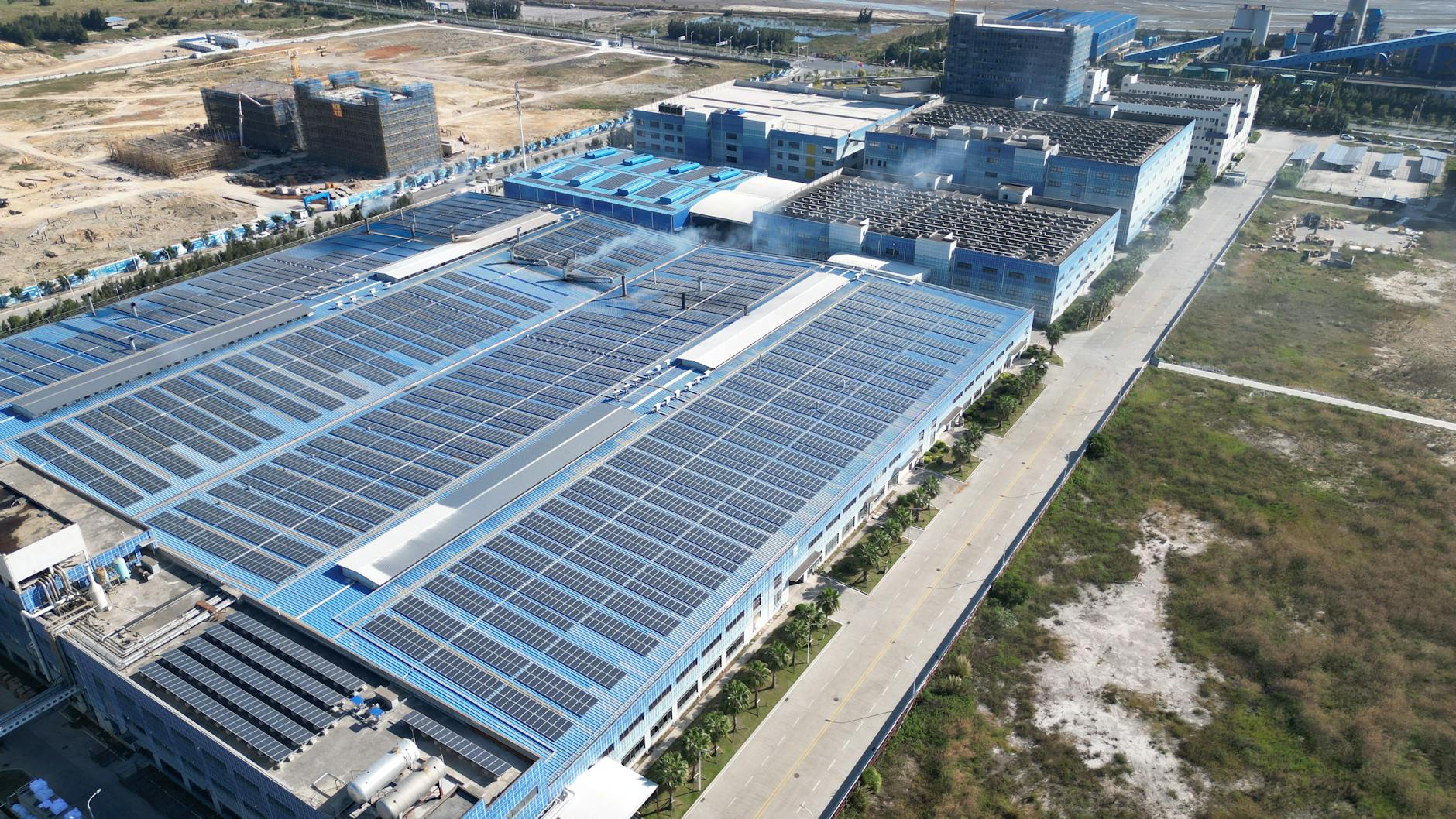
- Roof type: Most auto component factories have metal-sheet (tin roof) warehouse structures with large, shadow-free areas ideal for solar. These roofs can typically support solar panel loads (15-20 kg/sqm) without structural reinforcement
- 24-hour operations: Factories running three shifts generate 50-60% of consumption during daylight hours. Solar can offset daytime consumption entirely, with grid power used for night shifts
- Demand charge reduction: Solar reduces your peak demand from the grid during daytime, potentially reducing TANGEDCO demand charges — an often-overlooked benefit that can save Rs 1-3 lakh/month for medium and large factories
Avoiding the Common Oversizing Mistake
A frequent error in industrial solar sizing is installing capacity based on connected load rather than actual consumption patterns. A factory with 500 kW connected load that operates CNC machines at 60-70% utilization on average, with staggered start times, may have an actual peak demand of only 300-350 kW. Oversizing beyond what you can consume during daylight hours leads to energy export at unfavourable net billing rates instead of direct self-consumption savings.
The ideal approach: size your solar system to match 80-90% of your average daytime consumption. This ensures maximum self-consumption (where savings are highest) while avoiding significant energy export.
Financial Analysis: 300 kW System for a Medium Factory
| Parameter | Value |
|---|---|
| System cost | Rs 1.35-1.65 crore |
| Annual generation | 4,50,000-4,80,000 units |
| Annual savings (at Rs 8/unit avg.) | Rs 36-38 lakh |
| Simple payback period | 3.5-4.5 years |
| 25-year lifetime savings | Rs 8-10 crore |
| Accelerated depreciation benefit (40%) | Rs 20-25 lakh (tax saving) |
| Effective payback with depreciation | 2.5-3.5 years |
For a full breakdown of how these numbers work in your specific case, use our solar ROI calculator or read our detailed guide on solar ROI and payback calculations.
Accelerated Depreciation: A Major Benefit for Manufacturers
Auto component manufacturers registered as companies can claim 40% accelerated depreciation on solar assets in the first year under the Income Tax Act. For a Rs 1.5 crore solar investment, this creates a depreciation claim of Rs 60 lakh in Year 1, translating to a tax benefit of Rs 15-20 lakh (at 25-30% corporate tax rate). This effectively reduces the payback period by 8-12 months.
CAPEX vs PPA vs Lease: Which Ownership Model Works Best
Auto component manufacturers have three main options for solar adoption:
CAPEX (Self-ownership): You purchase and own the system outright. Best for profitable companies that can use the accelerated depreciation benefit and want maximum long-term savings. Payback is 2.5-4.5 years depending on system size and tariff. You retain full ownership of all savings for 25 years.
PPA (Power Purchase Agreement): A solar PPA involves a third party installing and owning the system on your roof. You buy power at a pre-agreed rate (typically Rs 3.5-5.0/unit with annual escalation of 1-3%). This requires zero upfront investment and delivers immediate savings of Rs 2-4/unit over grid tariff. Best for companies that prefer to preserve capital for core manufacturing operations.
Lease model: You lease the solar equipment and make monthly payments. Savings are lower than CAPEX but you retain the depreciation benefit in some structures. This is less common in Tamil Nadu's industrial segment but worth evaluating if your bank offers favourable terms.
For most medium-sized auto component manufacturers with stable profitability, CAPEX delivers the best overall returns. For companies focused on scaling production and wanting to keep capital free, PPA is the practical choice.
GST on Solar Systems
Solar panels and modules attract a 5% GST rate, which is significantly lower than the 18% GST on most industrial equipment. Inverters and mounting structures are also at reduced rates when purchased as part of a solar power generating system. This favourable GST treatment improves the financial case for solar compared to other capital investments.
MSME Registration Benefits
If your auto component manufacturing unit is registered as an MSME under Udyam, you may be eligible for additional subsidies, priority lending rates for solar financing, and faster TANGEDCO approvals in some cases. Many Tier-2 and Tier-3 auto component manufacturers qualify as MSMEs and should explore these benefits before finalizing their solar investment.
Choosing the Right Equipment for Industrial Environments
Auto component factories present specific challenges that consumer or commercial-grade solar equipment cannot always handle. Here is what to look for.
Solar Panels
For industrial rooftops exposed to metallic dust, coolant vapours, and high ambient temperatures, choose panels rated for harsh environments. Bifacial panels can generate 5-10% additional energy on metal-sheet roofs due to rear-side reflection, but the premium may not always be justified. More important factors:
- Temperature coefficient: Industrial roofs get extremely hot in Tamil Nadu summers. Look for panels with a temperature coefficient better than -0.35%/C. Every degree above 25C reduces output; better coefficients mean less loss.
- PID resistance: Potential Induced Degradation is more likely in high-humidity industrial environments. Ensure panels are PID-resistant and carry the relevant IEC certification.
- Warranty terms: Standard panel warranties are 25 years for performance and 12-15 years for product. For industrial use, confirm the warranty covers your specific installation type (elevated rooftop, carport, etc.).
Check our 2026 pricing guide for current panel prices across different brands and configurations.
Inverters
For auto component factories, the inverter choice significantly affects system reliability and monitoring capability. String inverters from established brands like Fronius, Sungrow, or Huawei are standard for industrial installations. Key considerations:
- Voltage harmonics: CNC machines and VFDs (Variable Frequency Drives) generate harmonics that can affect inverter performance. Choose inverters with robust THD (Total Harmonic Distortion) handling.
- Remote monitoring: Industrial solar systems should have real-time monitoring that your maintenance team can access via app or web dashboard. Generation alerts help catch performance drops early.
- Ambient temperature rating: Ensure inverters are rated for operation at 50C+ ambient temperatures. Inverter rooms in factories without adequate ventilation can exceed this easily in Tamil Nadu summers.
Mounting Structures
On metal-sheet roofs, mounting clamps must be compatible with your specific roof profile (trapezoidal, standing seam, or corrugated). Incorrect clamp selection is one of the most common installation errors on factory roofs and leads to water leakage at penetration points. Non-penetrating clamp systems are preferred when the roof profile allows it.
Installation Approach for Industrial Facilities
Phase 1: Rooftop Solar on Factory Shed
Most factories start with rooftop solar on their main production shed. A typical 10,000 sq ft factory roof can accommodate 80-100 kW of panels. Key steps in this phase:
- Structural assessment of the roof (load-bearing capacity, truss condition, roof sheet age)
- Shadow analysis accounting for parapet walls, overhead cranes, exhaust chimneys, and adjacent buildings
- Electrical integration plan — whether to connect at the LT panel level or HT level depends on system size and your existing electrical architecture
For systems above 100 kW on HT connections, TANGEDCO requires a separate solar meter and approval from the Superintending Engineer. Your installer should handle this liaison process.
Phase 2: Carport and Parking Solar
Factory parking areas, employee two-wheeler sheds, and loading bay canopies offer additional area for solar installations. Carport solar structures serve a dual purpose — generating electricity and providing shade for vehicles and workers. Carport structures cost 15-25% more per kW than rooftop installations due to the steel structure required, but the additional generation capacity often justifies the investment, particularly when rooftop space is limited.
Phase 3: Ground-Mount on Unused Land
Factories with surrounding land (common in Oragadam, Sriperumbudur, and Hosur industrial areas where land parcels are large) can install ground-mounted solar for additional capacity beyond rooftop limits. Ground-mount systems are easier to maintain and clean, and allow optimal tilt angles for maximum generation.
Phase 4: Open Access for Large Consumers
Factories with contract demand above 1 MW can explore open access solar from remote solar farms, achieving 80-100% renewable energy coverage. Open access involves purchasing solar power from an off-site generator through the TANGEDCO grid, paying wheeling and transmission charges that still result in net savings of Rs 1.5-3.0/unit compared to grid tariff.
Diesel Generator Replacement: A Hidden Benefit
Many auto component factories maintain diesel generators (DG sets) for power backup during TANGEDCO outages, which are not uncommon in industrial areas. Running a DG set costs Rs 18-25 per unit — two to three times the grid tariff. While solar alone cannot replace a DG set (solar generates only during daylight), a solar-plus-battery or solar-DG hybrid configuration can significantly reduce DG run-hours.
For factories experiencing frequent daytime power cuts (common during Tamil Nadu's summer months), solar with a small battery buffer can bridge 30-60 minute outages without triggering the DG set. This reduces diesel consumption, DG maintenance costs, and the noise and emissions associated with DG operation in the factory environment.
If your factory runs DG sets for more than 100 hours per month, the financial case for solar-DG hybrid systems is particularly strong. The diesel savings alone can accelerate solar payback by 6-12 months.
Maintenance Considerations for Factory Environments
Industrial solar installations require more attention than residential systems. Auto component factories generate metallic dust, coolant mist, and oil vapour that settle on panel surfaces and reduce generation by 5-15% if not cleaned regularly.
Cleaning Schedule
- Minimum: Bi-weekly panel cleaning during dry months (January-May), monthly during monsoon season when rain provides natural cleaning
- Factories with grinding/machining dust: Weekly cleaning is recommended. Metallic dust particles are abrasive and can micro-scratch panel surfaces if left to accumulate
- Method: Use soft water (avoid bore water with high TDS which leaves mineral deposits) and non-abrasive cleaning tools. Robotic cleaning systems are cost-effective for installations above 200 kW
Preventive Maintenance Checklist
Follow a structured maintenance framework that covers:
- Monthly: Visual inspection of panels, wiring, and mounting clamps. Check inverter error logs. Clean panels.
- Quarterly: Thermal imaging scan of panels to detect hot spots (especially important in factories with vibration from heavy machinery). Torque check on mounting bolts. Inverter filter cleaning.
- Annual: Full electrical inspection including string voltage testing, earth resistance measurement, and DC cable insulation testing. Roof condition assessment under and around the solar array.
Common Maintenance Mistakes in Factory Installations
- Using factory compressed air to clean panels: The oil content in most factory compressed air systems leaves a film on panels that actually worsens soiling
- Neglecting cable tray inspections: Rodents, coolant leaks, and vibration can damage cables in factory environments faster than in commercial buildings
- Ignoring inverter room ventilation: Industrial heat buildup in inverter rooms causes frequent thermal derating, reducing generation by 10-15% during peak summer hours
Tamil Nadu's Key Auto Component Clusters
Sriperumbudur-Oragadam Corridor (Chennai)
The Sriperumbudur-Oragadam industrial belt along NH48 is Tamil Nadu's largest auto manufacturing hub. Solar irradiance here averages 4.8-5.2 kWh/m2/day. Large factory plots with extensive roof areas make solar installations straightforward. TANGEDCO's Kancheepuram distribution circle handles industrial connections in this area. For a complete Chennai solar installation guide, see our detailed article.
Ambattur-Padi Industrial Estate (Chennai)
One of India's oldest industrial estates with dense concentration of auto component SMEs. Roof space is more constrained here, but even 50-100 kW systems deliver meaningful savings. TANGEDCO Chennai North circle covers this area.
Coimbatore Industrial Belt
Coimbatore's precision engineering and pump manufacturing clusters include many auto component suppliers. The city's excellent solar irradiance (5.0-5.3 kWh/m2/day) and lower humidity compared to Chennai deliver 5-8% higher generation per kWp. Read our full Coimbatore installation guide for location-specific details.
Hosur Industrial Area
The Hosur cluster serves both Tamil Nadu and Karnataka-based OEMs. Factories here often have larger land parcels suitable for ground-mounted solar in addition to rooftop installations.
Common Mistakes Auto Component Manufacturers Make with Solar
Based on our experience with industrial solar installations across Tamil Nadu, here are the most frequent errors and how to avoid them:
-
Delaying until the "right time": TANGEDCO tariffs increase annually. Every year of delay costs you the savings you would have earned. The best time to install is when your consumption pattern is stable and you have completed your financial evaluation.
-
Choosing the cheapest installer: Industrial solar is not the same as residential. Your installer must have experience with HT connections, structural engineering for factory roofs, TANGEDCO liaison for industrial approvals, and understanding of industrial electrical systems. Ask for references from similar factory installations.
-
Not accounting for future expansion: If you plan to add CNC machines or production lines in the next 2-3 years, size your inverter capacity and electrical infrastructure for the expanded system from the start. Adding panels later is easy; upgrading inverters and cabling is expensive.
-
Ignoring the electrical infrastructure: Older factories with outdated LT panels and transformer capacity may need electrical upgrades before solar integration. These costs should be identified during the feasibility assessment, not discovered during installation.
-
Skipping the structural assessment: Metal-sheet roofs older than 15 years may not support panel loads safely. A proper structural assessment by a certified engineer is non-negotiable, especially for factories with overhead crane loads on the same roof trusses.
Step-by-Step Decision Framework for Factory Owners
If you are considering solar for your auto component factory, here is a practical decision sequence:
Step 1 — Gather your data: Collect 12 months of TANGEDCO bills, note your contract demand, sanctioned load, and average monthly consumption. Identify your daytime vs nighttime consumption split.
Step 2 — Assess available space: Measure roof area (excluding areas with shadow from chimneys, cranes, or adjacent structures), parking areas, and any unused land. A rough rule: 100 sq ft of shadow-free area yields approximately 1 kW of solar capacity.
Step 3 — Define your objective: Are you primarily targeting cost reduction, OEM compliance, RPO compliance, or a combination? This determines the optimal system size and ownership model.
Step 4 — Get multiple proposals: Obtain at least 3 proposals from experienced industrial solar installers. Compare not just price per kW, but equipment quality, warranty terms, panel and inverter brands, maintenance terms, and TANGEDCO liaison support.
Step 5 — Evaluate financial models: Compare CAPEX vs PPA for your specific tax situation. Run the numbers through our solar calculator and discuss with your CA to understand the depreciation and tax implications.
Step 6 — Check approvals and timelines: For HT connections, TANGEDCO approval can take 4-8 weeks. Factor this into your project timeline. Your installer should handle all documentation and liaison.
Step 7 — Plan for monitoring: Insist on a real-time monitoring system that tracks generation, consumption, and export in real time. This is essential for verifying performance guarantees and catching issues early.
Getting Started
Auto component manufacturers considering solar should start with an energy audit to understand their consumption pattern, peak demand, and daytime vs nighttime split. This data drives the optimal solar system sizing.
Use our commercial solar calculator to get an initial estimate of system size and savings for your factory, or contact Tristar for an on-site energy audit and detailed proposal. We have extensive experience with industrial solar installations across Tamil Nadu's auto component manufacturing clusters, including TANGEDCO HT liaison, structural assessment for factory roofs, and accelerated depreciation documentation support.
You can also explore our completed industrial projects and read what other factory owners say about their experience in our testimonials. For answers to common questions about industrial solar, visit our FAQ page.
Ready to Go Solar?
Get a personalized solar quote based on your electricity consumption and roof area.
Related Articles
Solar for Brick Kilns and Construction Industry in Tamil Nadu
Discover how brick kilns and construction companies in Tamil Nadu are adopting solar energy to power conveyor systems, crushers, and site offices while reducing diesel generator dependence.
Solar for Coir Industry: Powering Pollachi's Coconut Fiber Units
Discover how coir manufacturing units in Pollachi and surrounding areas are switching to solar power to run defibering machines, spinning units, and drying operations while reducing energy costs significantly.
Solar for Flour Mills and Grain Processing Units in Tamil Nadu
How flour mills and grain processing units across Tamil Nadu can cut electricity costs by 50-70% with rooftop solar — system sizing, ROI analysis, and subsidy options for the milling industry.