On This Page
Tamil Nadu has over 6,000 petrol bunks and fuel stations operated by Indian Oil Corporation (IOCL), Bharat Petroleum (BPCL), Hindustan Petroleum (HPCL), Nayara Energy, and private retailers. Across India, the fuel retail network has crossed the 1,00,000-mark as of late 2025 -- nearly doubling from approximately 50,000 stations in 2015. These stations operate 14 to 20 hours daily, running fuel dispensing pumps, canopy and forecourt lighting, convenience stores, air and water facilities, CCTV surveillance, ATMs, car washes, and increasingly, EV charging stations. While individual station electricity consumption may seem modest compared to factories, the cumulative cost across a dealer's operating lifetime is enormous -- and rising every year.
A typical fuel station in Tamil Nadu spends Rs 25,000 to Rs 80,000 monthly on electricity, with highway mega-stations crossing Rs 2,00,000. With TANGEDCO commercial tariffs at Rs 7 to 9 per unit and oil marketing companies (OMCs) pushing dealers toward energy efficiency and green operations, solar canopies and rooftop systems have emerged as the ideal solution -- generating power while providing the shade structure that fuel stations already require. The convergence of falling solar costs, OMC sustainability mandates, EV infrastructure buildout, and favourable government policy has created what is arguably the strongest business case for solar adoption in the commercial retail segment today.
This guide covers everything a petrol bunk dealer or oil company operations manager in Tamil Nadu needs to know about solar -- from system sizing and safety compliance to ROI projections and future-proofing for the EV transition.
The Indian Fuel Station Landscape: Scale and Opportunity
India's petroleum retail network is massive. As of November 2025, the country had 1,00,266 operational petrol pumps. Over 90 percent of these are owned by three state-run oil marketing companies:
- IOCL (Indian Oil Corporation): 41,664 outlets -- the single largest fuel retailer in India
- BPCL (Bharat Petroleum): 24,605 stations
- HPCL (Hindustan Petroleum): 24,418 outlets
Private players include Nayara Energy (Rosneft-backed) with 6,921 outlets, the Reliance-BP joint venture with 2,114 stations, and Shell with 346 outlets. Tamil Nadu itself accounts for roughly 6,000 of these, with a high concentration along the NH44 (Chennai-Bangalore), NH48 (Coimbatore-Bangalore), NH45 (Chennai-Trichy), and key state highway corridors.
Every one of these stations consumes electricity around the clock. The aggregate electricity consumption of India's fuel retail network runs into billions of units annually. Even a modest 10 to 15 percent reduction through solar adoption would translate into hundreds of megawatts of clean energy capacity -- and that is precisely the opportunity that OMCs and forward-thinking dealers are now pursuing.
Energy Profile of Petrol Bunks: Understanding the Load
Before sizing a solar system, it is essential to understand exactly what consumes electricity at a fuel station. The load profile of a modern petrol bunk is more complex than most people realise.
Detailed Equipment Load Breakdown
| Equipment | Typical Rating | Operating Hours | Daily Consumption (kWh) | Notes |
|---|---|---|---|---|
| Submersible fuel dispensing pumps (per pump) | 3-7 kW | 10-16 hrs (intermittent) | 15-56 | Load varies with fuel throughput |
| Canopy and forecourt lighting | 3-8 kW | 12-18 hrs | 36-144 | LED vs conventional makes a big difference |
| Convenience store / mini-mart (AC, lighting, refrigeration) | 5-15 kW | 12-18 hrs | 60-270 | AC is the dominant load here |
| Office, billing systems, POS terminals | 1-3 kW | 12-16 hrs | 12-48 | Includes UPS systems |
| Air and water facility | 1-3 kW | 10-14 hrs | 10-42 | Compressor and water pump |
| CCTV and security systems | 1-2 kW | 24 hrs | 24-48 | Continuous load, non-negotiable |
| Signage, price display boards, brand totems | 1-3 kW | 12-18 hrs | 12-54 | Illuminated signage runs through the night |
| ATM kiosk | 2-3 kW | 24 hrs | 48-72 | AC-cooled, continuous operation |
| Car wash facility | 5-15 kW | 6-10 hrs | 30-150 | High-pressure pump is the main draw |
| Service bay / tyre shop | 3-8 kW | 8-12 hrs | 24-96 | Air compressor, lighting, tools |
| EV charging station (per charger) | 7-60 kW | Variable | 50-300+ | Depends on charger type and utilisation |
Monthly Consumption by Station Type
| Station Type | Connected Load | Monthly Units | Monthly Bill (approx.) | Annual Electricity Cost |
|---|---|---|---|---|
| Basic rural station (2-4 pumps) | 10-20 kW | 3,000-6,000 | Rs 24,000-48,000 | Rs 2.9-5.8 lakh |
| Standard urban station (4-8 pumps + store) | 20-40 kW | 6,000-12,000 | Rs 48,000-96,000 | Rs 5.8-11.5 lakh |
| Highway mega-station (8+ pumps + restaurant + car wash) | 40-80 kW | 12,000-25,000 | Rs 96,000-2,00,000 | Rs 11.5-24.0 lakh |
| EV-enabled station (with DC fast chargers) | 50-120 kW | 15,000-40,000 | Rs 1,20,000-3,20,000 | Rs 14.4-38.4 lakh |
A critical advantage for solar at fuel stations is load-generation overlap. Fuel stations have their highest activity between 6 AM and 10 PM, with significant daytime load from AC systems, dispensing pumps, and customer traffic. Solar generation peaks between 9 AM and 4 PM, aligning well with the station's demand curve. This means a well-sized on-grid solar system can offset a substantial percentage of daytime consumption directly, with excess power exported under net metering or net billing.
Why Oil Companies Are Pushing Solar: OMC Solarization Programs
The drive toward solar at petrol bunks is not just coming from cost-conscious dealers -- it is being actively mandated and incentivized by the oil marketing companies themselves. Understanding the OMC perspective is crucial for dealers evaluating the investment.
IOCL's Solarization Program
Indian Oil Corporation has been the most aggressive among OMCs in solarizing its retail network. As of 2025, IOCL has installed solar power units at over 20,000 retail outlets -- approximately 57 percent of its network -- with a combined capacity exceeding 111 MW. The program covers both Company-Owned Company-Operated (COCO) outlets and dealer-operated stations through various co-funding models.
For dealer-operated stations, IOCL typically offers:
- Co-investment models where the oil company funds a portion of the solar installation cost
- Approved vendor empanelment to ensure quality and standardized installations
- Performance scoring that rewards solarized stations with higher dealer ratings
- Technical assistance with TANGEDCO net metering applications and PESO compliance
IOCL's broader sustainability target is to reach a 31 GW renewable energy portfolio by 2030 through organic and inorganic growth. The solarization of retail outlets is a visible, customer-facing component of this strategy.
BPCL's Green Energy Push
Bharat Petroleum has taken a comprehensive approach to greening its fuel stations. BPCL's targets include building 2 GW of renewable energy capacity by 2025 and scaling to 10 GW by 2035. The company has earmarked approximately Rs 1 lakh crore for green energy initiatives and has already installed EV charging stations at over 6,500 fuel stations.
BPCL's retail solarization operates through approved channel partners who handle design, installation, and commissioning. The company has also invested in large-scale solar projects -- including a recently commissioned 71 MWp solar plant at Prayagraj -- to offset the energy consumption of its refinery and pipeline operations.
HPCL's Dealer Incentive Model
Hindustan Petroleum offers dealer incentives and co-investment arrangements for solar canopy installations. HPCL's model typically involves:
- Approved solar canopy designs that integrate with HPCL's brand guidelines
- Co-sharing of installation costs between the oil company and the dealer
- Priority consideration for additional amenity approvals (convenience store, car wash) for solarized stations
Private Player Initiatives
Nayara Energy and the Reliance-BP joint venture are actively installing solar at new and upgraded stations as standard practice. For these players, solar is not an add-on but a baseline requirement for new station construction.
The collective message from OMCs is unambiguous: solarization is not optional for the future of fuel retail. Dealers who invest early benefit from better OMC relationships, higher dealership scores, and preferential treatment during license renewals and expansion approvals.
Solar Canopy Integration: The Perfect Dual-Use Solution
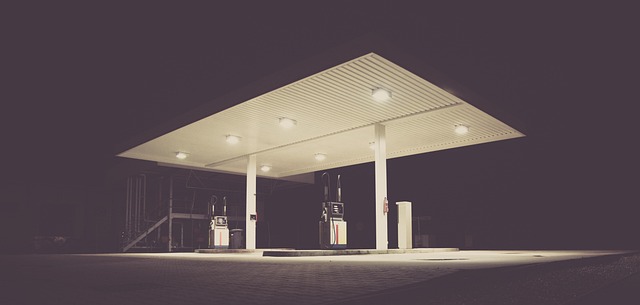
The most compelling solar application for petrol bunks is the solar canopy -- integrating solar panels into the existing or new fuel station canopy structure. This approach solves two problems simultaneously: weather protection for customers and clean energy generation for the station.
Why Solar Canopies Work So Well at Fuel Stations
Every petrol bunk needs a canopy. It is a structural requirement -- protecting customers from rain and sun while fuelling, housing lighting fixtures, and displaying branding elements. Since the canopy investment is already necessary, converting it to a solar canopy involves only an incremental cost increase while delivering decades of electricity savings.
Key advantages include:
- No additional land required: Uses the existing forecourt footprint that is already paved and unobstructed
- Dual purpose: Provides weather protection and generates electricity simultaneously
- Visual branding: A solar canopy is a visible statement of the station's commitment to sustainability, attracting environmentally conscious customers
- OMC compliance: Directly aligns with IOCL, BPCL, and HPCL sustainability mandates and approved canopy designs
- Superior shade quality: Solar panels provide better heat insulation than standard metal roofing, keeping the forecourt cooler
Typical Solar Canopy Sizing and Output
| Canopy Area | Solar Capacity | Monthly Generation (Tamil Nadu avg.) | Monthly Savings (at Rs 8/unit) | Annual Savings |
|---|---|---|---|---|
| 1,000 sq ft | 10-12 kW | 420-540 units | Rs 3,360-4,320 | Rs 40,320-51,840 |
| 1,500 sq ft | 15-18 kW | 630-810 units | Rs 5,040-6,480 | Rs 60,480-77,760 |
| 2,500 sq ft | 25-30 kW | 1,050-1,350 units | Rs 8,400-10,800 | Rs 1,00,800-1,29,600 |
| 3,500 sq ft | 35-42 kW | 1,470-1,890 units | Rs 11,760-15,120 | Rs 1,41,120-1,81,440 |
| 5,000 sq ft | 50-60 kW | 2,100-2,700 units | Rs 16,800-21,600 | Rs 2,01,600-2,59,200 |
Tamil Nadu's average solar irradiance of 4.5 to 5.5 kWh per square metre per day makes it one of the best states in India for solar canopy returns. Coimbatore and western Tamil Nadu districts benefit from particularly consistent generation throughout the year.
Solar on Car Wash and Service Bay Roofs
Beyond the main fuel canopy, many modern petrol bunks have additional roofed structures -- car wash bays, service bays, tyre shops, lubricant change stations, and staff quarters. These rooftops represent additional solar real estate that is often overlooked.
A typical car wash bay has 400 to 800 sq ft of roof area, suitable for 4 to 8 kW of solar panels. Service bays and tyre shops add another 300 to 600 sq ft. Combined with the main canopy, a well-planned station can install 30 to 50 percent more solar capacity by utilising these ancillary structures.
The car wash bay is a particularly smart location because the car wash itself is one of the most power-hungry amenities at a station (5 to 15 kW for high-pressure pumps). Placing solar panels directly on the car wash roof creates a neat self-powering loop -- the panels generate electricity during daylight hours when the car wash is busiest.
System Sizing Recommendations by Station Type
Proper solar system sizing is critical for maximizing returns. Undersizing leaves savings on the table; oversizing (beyond what net metering can accommodate) wastes capital. Here are detailed sizing recommendations based on station type and load profile.
Small Rural or Semi-Urban Station (2-4 Pumps)
- Connected load: 10-20 kW
- Recommended solar capacity: 10-15 kW
- Installation type: Canopy-mounted or rooftop on office/store
- Expected offset: 60-80% of daytime electricity consumption
- Estimated investment: Rs 6-10 lakh (rooftop) or Rs 10-15 lakh (solar canopy)
These stations typically do not have convenience stores or car washes. The primary loads are dispensing pumps, lighting, and basic office equipment. A 10 to 15 kW system on the existing canopy or office roof is usually sufficient.
Standard Urban Station (4-8 Pumps + Convenience Store)
- Connected load: 20-40 kW
- Recommended solar capacity: 20-35 kW
- Installation type: Solar canopy (primary) + rooftop on store/office
- Expected offset: 50-70% of total electricity consumption
- Estimated investment: Rs 14-25 lakh
The convenience store AC system is typically the biggest load driver. A 25 to 35 kW solar canopy combined with rooftop panels on the store provides strong daytime offset. This is the sweet spot for most urban dealers in cities like Coimbatore, Chennai, Madurai, and Trichy.
Highway Mega-Station (8+ Pumps + Restaurant + Car Wash)
- Connected load: 40-80 kW
- Recommended solar capacity: 40-60 kW
- Installation type: Large solar canopy + rooftop on restaurant, car wash bay, and service areas
- Expected offset: 40-60% of total electricity consumption
- Estimated investment: Rs 28-45 lakh
Highway stations have the highest electricity bills but also the most available canopy and roof area. The restaurant and food court are major load centres. These stations benefit from maximizing every available roof surface -- main canopy, restaurant roof, car wash bay, and even parking shade structures.
EV-Enabled Station (With DC Fast Chargers)
- Connected load: 50-120 kW
- Recommended solar capacity: 50-100 kW
- Installation type: Maximum coverage -- canopy, all rooftops, parking shade structures
- Expected offset: 30-50% of total consumption (EV charging is a heavy load)
- Estimated investment: Rs 35-70 lakh
EV charging fundamentally changes the electricity profile of a fuel station. A single 30 kW DC fast charger can consume 100 to 200 units daily when well-utilised. Solar alone cannot fully power EV charging, but it significantly reduces the grid dependence and associated costs. For details on sizing solar for EV charging, see our guide on EV charging with rooftop solar.
For all station types, the solar installation process follows a standard sequence: site survey, structural assessment, electrical design, TANGEDCO net metering application, installation, and commissioning.
Detailed ROI Analysis
The financial case for solar at petrol bunks is compelling across all station types. Here is a detailed breakdown for a standard 30 kW solar canopy installation -- the most common configuration for urban stations in Tamil Nadu.
Investment and Returns: 30 kW Solar Canopy
| Parameter | Value |
|---|---|
| Solar canopy system cost (panels + structure + inverter + installation) | Rs 18-22 lakh |
| Annual generation (Tamil Nadu average) | 42,000-46,000 units |
| Tariff rate (TANGEDCO commercial HT/LT) | Rs 7.50-9.00 per unit |
| Annual savings | Rs 3,15,000-4,14,000 |
| Simple payback period | 4.5-6.5 years |
| 25-year lifetime savings (with 3% annual tariff escalation) | Rs 1.0-1.4 crore |
| Internal rate of return (IRR) | 18-24% |
| Net present value (NPV at 10% discount rate) | Rs 18-28 lakh |
Comparison: Solar Canopy vs. Conventional Canopy
A conventional metal canopy for a standard fuel station costs Rs 8 to 12 lakh for construction alone. A solar canopy for the same area costs Rs 18 to 22 lakh. The incremental cost attributable to the solar component is Rs 10 to 12 lakh. This incremental investment pays for itself in just 2.5 to 3.5 years through electricity savings -- making it one of the fastest-payback solar investments in any commercial segment.
ROI by Station Type
| Station Type | Solar Size | Investment | Annual Savings | Payback Period | 25-Year Net Savings |
|---|---|---|---|---|---|
| Basic rural (2-4 pumps) | 10-15 kW | Rs 6-10 lakh | Rs 1.0-1.6 lakh | 4-6 years | Rs 30-50 lakh |
| Standard urban (4-8 pumps) | 25-35 kW | Rs 16-25 lakh | Rs 2.6-4.3 lakh | 5-6 years | Rs 75-1.2 crore |
| Highway mega-station | 40-60 kW | Rs 28-45 lakh | Rs 4.4-7.4 lakh | 5-6.5 years | Rs 1.3-2.1 crore |
| EV-enabled station | 60-100 kW | Rs 42-70 lakh | Rs 6.6-12.3 lakh | 5.5-7 years | Rs 2.0-3.5 crore |
These projections use conservative assumptions: 1 percent annual panel degradation, 3 percent annual tariff escalation, and no subsidy. With accelerated depreciation benefits (available to dealers structured as companies or firms), the effective payback can be reduced by 1 to 1.5 years. Understanding the various factors affecting solar payback period in Tamil Nadu helps dealers set realistic expectations.
Additional Revenue from Carbon Credits
Fuel stations with solar installations can register for carbon credit trading. A 30 kW solar system avoids approximately 35 to 40 tonnes of CO2 annually. At current voluntary carbon market prices, this can generate Rs 20,000 to Rs 50,000 in additional annual revenue. While not a primary financial driver, carbon credits add to the overall ROI and align with OMC sustainability reporting requirements. Learn more about solar carbon credits for Tamil Nadu businesses.
EV Charging Station Integration: Future-Proofing the Petrol Bunk
The integration of EV charging infrastructure at fuel stations is no longer a future consideration -- it is happening right now. As of 2025, over 27,000 EV charging stations have been installed at petrol pumps across India, and public sector OMCs are developing approximately 4,000 "Energy Stations" between 2024-25 and 2028-29 that combine conventional fuels with EV charging, CNG, and other alternative energy services.
For Tamil Nadu, where EV adoption is accelerating rapidly (the state is India's largest automobile manufacturing hub), petrol bunk dealers who combine solar with EV charging position themselves for the next three decades of mobility infrastructure.
EV Charging Revenue Potential
| Charger Type | Power Rating | Units Served per Day | Daily Revenue (at Rs 15/kWh charging fee) | Monthly Revenue | Solar Offset Potential |
|---|---|---|---|---|---|
| AC slow charger (Level 2) | 7.4 kW | 4-6 vehicles | Rs 500-800 | Rs 15,000-24,000 | 80-100% with 10 kW solar |
| DC moderate charger | 15-25 kW | 8-15 vehicles | Rs 1,500-3,000 | Rs 45,000-90,000 | 40-60% with 20 kW solar |
| DC fast charger (CCS2) | 30-60 kW | 15-30 vehicles | Rs 4,000-10,000 | Rs 1,20,000-3,00,000 | 20-35% with 40 kW solar |
| Ultra-fast charger | 120-240 kW | 20-40 vehicles | Rs 10,000-25,000 | Rs 3,00,000-7,50,000 | 10-20% with 80 kW solar |
The economics are straightforward. Even a single 30 kW DC fast charger at a well-located urban or highway station can generate Rs 1.2 to 3 lakh in monthly revenue. The electricity cost for this charger (at 100 to 200 units daily) is Rs 24,000 to Rs 54,000 monthly at TANGEDCO commercial rates. Solar reduces this cost by 20 to 40 percent, directly improving the EV charging margin.
The Solar-EV Synergy
Solar and EV charging at fuel stations create a powerful synergy:
- Daytime charging alignment: Most commercial and fleet EV charging happens during business hours, overlapping with peak solar generation
- Reduced grid dependency: Solar offsets a portion of the massive EV charging load, reducing demand charges and TANGEDCO infrastructure requirements
- Green credentials: Solar-powered EV charging is genuinely "green mobility" -- a marketing advantage that attracts environmentally conscious customers
- Future battery storage: As battery prices decline, adding a Battery Energy Storage System (BESS) to the solar-EV setup enables time-shifting of solar energy to evening charging peaks
- Revenue diversification: As internal combustion engine (ICE) vehicle sales eventually plateau and decline, solar-powered EV charging provides an alternative revenue stream that preserves the petrol bunk's relevance
Dealers who invest in solar today are laying the foundation for EV charging profitability tomorrow. The canopy structure, electrical infrastructure, and net metering connection required for solar also serve as the backbone for EV charging deployment.
Government Mandates and Incentives
Multiple layers of government policy support solar adoption at fuel stations in Tamil Nadu.
Central Government Incentives
- MNRE subsidies: Commercial solar installations can access subsidies under the PM-SURYA Ghar and related schemes, though availability and quantum vary by scheme year
- Accelerated depreciation: Business entities (companies, LLPs, partnership firms) can claim 40 percent accelerated depreciation on solar assets in the first year, significantly reducing the effective tax burden and payback period. See our detailed guide on accelerated depreciation for solar in Tamil Nadu.
- Custom and GST concessions: Solar modules attract 0 percent basic customs duty and a concessional GST rate, reducing system costs
- FAME and PM E-DRIVE subsidies: For EV charging infrastructure at fuel stations, additional subsidies may be available under mobility and EV promotion schemes
Tamil Nadu State Incentives
- TANGEDCO net metering: Commercial fuel stations can avail net metering or net billing under TNERC regulations, allowing excess solar generation to offset grid consumption
- State solar policy support: Tamil Nadu's solar energy policy provides a supportive regulatory framework for commercial and industrial solar installations
- MSME benefits: Fuel station dealers registered under Udyam / MSME registration may access additional financial benefits, including priority sector lending at lower interest rates for solar investment
OMC-Specific Support
As discussed earlier, IOCL, BPCL, and HPCL each offer co-funding, approved vendor networks, and technical assistance for dealer solar installations. This OMC support is arguably the most significant "incentive" because it reduces the dealer's out-of-pocket investment and streamlines the approval process.
The Franchise Dealer Perspective: Cost Sharing and Ownership
Most petrol bunks in India operate under a franchise / dealership model. The dealer leases or owns the land, but the OMC owns or controls the brand, fuel supply, and significant operational standards. This creates a unique dynamic for solar investment.
Who Pays for Solar?
The cost-sharing model varies by OMC and station type:
- COCO outlets (Company Owned, Company Operated): The OMC bears the full cost of solar installation. The dealer or manager has no investment decision to make.
- CODO outlets (Company Owned, Dealer Operated): The OMC typically funds infrastructure upgrades, including solar canopies, as part of the station modernization program. The dealer benefits from lower electricity costs without capital outlay.
- DODO outlets (Dealer Owned, Dealer Operated): The dealer bears the primary investment responsibility. However, OMCs increasingly offer co-funding (typically 25 to 50 percent of the solar component cost) or interest-free loans to incentivize adoption.
Dealer Investment Considerations
For DODO dealers -- who constitute the majority of the fuel retail network -- the solar investment decision involves several factors:
- Lease term remaining: If the dealership agreement has 10+ years remaining, the payback math is straightforward. For shorter remaining terms, dealers should negotiate a solar asset transfer clause with the OMC.
- OMC approval: Solar installations must comply with OMC brand guidelines, approved canopy designs, and safety standards. Always secure written OMC approval before proceeding.
- Net metering ownership: The TANGEDCO net metering connection should be in the dealer's name (as the electricity consumer) to ensure savings flow directly to the dealer.
- Tax treatment: Dealers structured as companies or partnership firms can claim accelerated depreciation. Sole proprietors benefit from the electricity cost savings but not the depreciation advantage.
- Financing options: Solar-specific loans with 8 to 10 percent interest rates and 5 to 7 year terms are available from most banks. The monthly EMI is often less than the monthly electricity savings from day one, making it cash-flow positive from the start.
Safety Considerations: Hazardous Area Classification and Panel Placement
Fuel stations are inherently hazardous environments due to the storage and dispensing of flammable petroleum products. Solar installations at petrol bunks must comply with rigorous safety standards governed by the Petroleum and Explosives Safety Organisation (PESO), the Bureau of Indian Standards (BIS), and OMC-specific safety protocols.
Hazardous Area Classification at Fuel Stations
Fuel stations are classified into hazardous zones based on the likelihood of explosive gas atmospheres:
-
Zone 0: Areas where an explosive gas atmosphere is continuously present or present for long periods. At a fuel station, this includes the interior of underground fuel storage tanks and the immediate vapour space within tank sumps. No electrical equipment -- including solar components -- is permitted in Zone 0 areas.
-
Zone 1: Areas where an explosive gas atmosphere is likely to occur during normal operation. This includes the area within 1.5 metres of the fill point, vent pipes, and the immediate vicinity of fuel dispenser nozzles. Solar panels, inverters, and electrical junction boxes must not be placed in Zone 1 areas. All electrical equipment in Zone 1 must be explosion-proof (Ex d) or intrinsically safe (Ex ia).
-
Zone 2: Areas where an explosive gas atmosphere is not likely to occur during normal operation, but if it does, it will persist only for a short period. This extends to approximately 3 to 6 metres from dispensers and tank openings, depending on the specific OMC and PESO guidelines. Solar equipment in Zone 2 must be non-sparking and properly enclosed.
-
Safe area: Beyond the Zone 2 boundary, standard electrical equipment is permitted. Solar panels on canopy roofs (which are typically 4 to 5 metres above ground level and several metres horizontally from dispensers) generally fall in the safe area -- but this must be verified through a formal hazardous area classification study for each site.
Solar Panel Placement Rules
Based on PESO guidelines, OMC safety standards, and IS 6895 (Code of Practice for Hazardous Area Classification):
- Solar panels must be mounted on the canopy roof, at least 4 metres above ground level and outside the Zone 1 and Zone 2 envelopes. The canopy roof itself is almost always in the safe area because it is well above and away from fuel vapour sources.
- Inverters and electrical panels must be installed in the station office, electrical room, or other designated safe areas -- never in or adjacent to the fuel dispensing island or tank farm area.
- DC cabling from solar panels to the inverter must be routed through metal conduits where it passes near Zone 2 areas, with proper sealing and fire-resistant insulation.
- Earthing and lightning protection must comply with IS/IEC 62305 standards. Fuel stations are classified as high-risk structures for lightning, and the solar installation must integrate with the station's existing lightning protection system (LPS) rather than creating a separate system.
- No solar panel mounting directly above underground tank openings, vent pipes, or fill points, even if the horizontal distance exceeds Zone 2 limits -- this is a belt-and-suspenders OMC requirement.
Fire Safety and PESO Compliance
- All solar installations at fuel stations should obtain a No Objection Certificate (NOC) from the relevant PESO office
- Fire extinguishers rated for electrical fires (CO2 or dry chemical) must be installed near the inverter and electrical panel areas
- The solar system must include a rapid shutdown mechanism (DC disconnect switch accessible from ground level) to allow emergency de-energisation
- Regular maintenance inspections must verify that no loose connections, damaged insulation, or hot spots exist on panels or wiring within the canopy area
Practical Safety Recommendations
Working with an experienced solar installer who has completed fuel station projects is critical. The installer must be familiar with PESO regulations, OMC safety standards, and IS/BIS codes for hazardous area electrical installations. At Tristar Green Energy Solutions, our fuel station installations include a complete hazardous area assessment, PESO-compliant equipment selection, and documentation packages that satisfy OMC safety audits.
Canopy Structural Engineering and Design
Solar canopies at fuel stations are not standard rooftop installations. They require specialised structural engineering to meet the unique requirements of the fuel retail environment.
Key Design Requirements
- Wind load compliance: Solar canopies must be designed to IS 875 (Part 3) wind load standards. Highway stations in particular face high wind exposure. The canopy structure must withstand the basic wind speed for the station's geographic zone (typically 39 to 50 m/s for most Tamil Nadu locations).
- Vehicle clearance: The canopy must provide minimum 5.5 metre clearance for fuel tanker lorries during refuelling operations. Standard fuel canopy heights of 5.5 to 6.5 metres are adequate for solar panel mounting on top.
- Corrosion resistance: Hot-dip galvanized steel structures (conforming to IS 4759) are recommended. The forecourt environment includes fuel vapours, vehicle exhaust, and rainwater -- all of which accelerate corrosion of untreated steel.
- Panel tilt optimisation: While the canopy is typically flat or has a minimal slope for rainwater drainage, the solar panel mounting system can introduce a 5 to 15 degree tilt to optimise generation without significantly increasing wind load or visual impact.
- Branding integration: OMCs have specific guidelines for signage placement, brand colour schemes, and logo visibility. The solar canopy design must accommodate brand fascia boards, illuminated signage, and corporate colour panels. Most major OMCs now have pre-approved solar canopy templates available through their retail engineering departments.
Getting Started: The Path to Solar for Your Petrol Bunk
Transitioning a fuel station to solar involves a structured process, but it is far less complex than most dealers anticipate. Here is the typical path:
- Initial assessment: Evaluate your station's monthly electricity consumption, available canopy and roof area, OMC affiliation, and TANGEDCO connection details.
- OMC approval: Submit a solar installation proposal to your OMC divisional or regional office. Most OMCs have standardized approval processes and pre-approved designs.
- Site survey and design: A qualified solar installer conducts a detailed site survey, including structural assessment of the existing canopy, hazardous area classification review, electrical load analysis, and shadow mapping.
- Financial planning: Finalise the investment, financing, and any OMC co-funding arrangements. Use our solar savings calculator for preliminary estimates.
- TANGEDCO net metering application: Apply for net metering connection through TANGEDCO, which is a prerequisite for grid-connected solar systems.
- Installation and commissioning: Typical installation takes 2 to 4 weeks for a standard fuel station solar canopy. The station continues normal operations during installation.
- PESO and safety compliance: Obtain necessary safety clearances and update the station's fire safety documentation.
- Monitoring and maintenance: Annual maintenance visits and real-time generation monitoring ensure optimal long-term performance.
Tristar Green Energy Solutions has extensive experience designing and installing solar canopy and rooftop systems for fuel stations across Tamil Nadu, with installations that comply with both TANGEDCO net metering requirements and OMC brand guidelines. We work closely with station dealers, OMC representatives, and PESO consultants to ensure seamless approval and implementation.
Use our solar savings calculator to estimate your station's potential savings, or contact our team for a site assessment and customized solar canopy proposal tailored to your station type, OMC affiliation, and business goals.
FAQ
How much does a solar canopy cost for a petrol bunk in Tamil Nadu?
A solar canopy for a standard fuel station (covering approximately 3,000 to 4,000 sq ft of forecourt area) costs between Rs 18 and 25 lakh, including the canopy structure, solar panels, inverter, wiring, and installation. This is approximately Rs 10 to 12 lakh more than a conventional non-solar canopy for the same area. The incremental solar cost typically pays for itself within 3 to 4 years through electricity savings. Smaller stations (1,500 sq ft canopy) can get started for Rs 10 to 15 lakh, while highway mega-stations with 5,000+ sq ft canopies may invest Rs 35 to 50 lakh for a comprehensive installation covering all structures.
Do I need OMC approval before installing solar at my petrol pump?
Yes. Solar installations at franchise-operated petrol pumps must be approved by the oil marketing company (IOCL, BPCL, HPCL, or the relevant private operator). OMCs have specific brand guidelines for canopy appearance, signage placement, and structural standards. Additionally, the installation must comply with PESO safety regulations for electrical equipment in hazardous areas. Most OMCs have streamlined the approval process and have pre-approved solar canopy designs available. Your solar installer should coordinate with the OMC engineering department to ensure full compliance. At Tristar, we handle the OMC coordination as part of our standard project delivery.
Can solar fully power a petrol bunk's electricity needs?
For basic and standard stations, a well-sized solar system can offset 50 to 80 percent of total electricity consumption and an even higher percentage of daytime consumption. Complete grid independence is generally not practical or cost-effective for fuel stations because nighttime loads (CCTV, ATM, signage, security lighting) continue after solar generation stops. However, with net metering, excess daytime solar generation is credited against nighttime consumption, effectively reducing the net electricity bill by 50 to 70 percent for most stations. Stations with EV charging infrastructure will see a lower offset percentage (30 to 50 percent) due to the heavy EV charging load, but the absolute savings in rupees are still substantial.
Is it safe to install solar panels at a petrol station given the fire risk?
Yes, when done correctly by experienced installers following PESO guidelines and OMC safety standards. Solar panels are mounted on the canopy roof, typically 4 to 5 metres above ground level and well outside the hazardous zones (Zone 0, Zone 1, Zone 2) around fuel dispensers and storage tanks. Inverters and electrical panels are installed in designated safe areas away from fuel handling points. The installation includes comprehensive lightning protection, surge protection devices, and rapid shutdown mechanisms. Thousands of fuel stations across India already have solar installations operating safely. The key is working with an installer who understands fuel station hazardous area classification and has a track record of PESO-compliant installations.
What is the payback period for solar at a petrol bunk?
The typical payback period for a solar installation at a Tamil Nadu fuel station is 4.5 to 6.5 years, depending on station type, solar system size, electricity tariff, and whether the installation is a solar canopy (higher cost but dual purpose) or a standard rooftop system (lower cost). When comparing only the incremental cost of solar over a conventional canopy (since the canopy structure is needed regardless), the payback drops to 2.5 to 3.5 years. With accelerated depreciation benefits for dealers structured as companies, the effective payback can be reduced by a further 1 to 1.5 years. Over the 25-year system lifetime, a standard 30 kW solar canopy generates Rs 1 to 1.4 crore in cumulative electricity savings.
How does EV charging at my petrol bunk work with solar?
Solar and EV charging are complementary investments at a fuel station. The solar system generates electricity during daytime hours, which directly powers EV chargers when vehicles are charging. Excess solar generation is exported to the grid under net metering, and the credits offset the cost of EV charging during evenings or nights. For a station with a 30 kW solar system and a 30 kW DC fast charger, solar can offset 20 to 35 percent of the EV charger's electricity consumption. As EV adoption grows, the charger utilisation rate increases, and the solar investment becomes even more valuable as a hedge against rising electricity costs. Many OMCs are now requiring or incentivizing combined solar-plus-EV-charging installations at fuel stations as part of their "Energy Station" transformation programs.
Ready to Go Solar?
Get a personalized solar quote based on your electricity consumption and roof area.
Related Articles
Solar for Automobile Workshops and Service Centers in Tamil Nadu
Explore how automobile workshops, car service centres, and two-wheeler garages in Tamil Nadu are adopting solar power to run compressors, lifts, and lighting while cutting monthly electricity bills.
Solar for Bakeries and Food Processing Units in Tamil Nadu
Discover how bakeries and food processing units across Tamil Nadu are using solar energy to power ovens, refrigeration, and packaging lines while reducing operational costs and carbon footprint.
Solar for Cinema Theatres: Reducing AC and Lighting Costs in TN
Learn how cinema theatres and multiplexes across Tamil Nadu are installing rooftop solar to offset massive air conditioning and lighting bills, with payback periods as low as 3-4 years.