On This Page
If you have recently started exploring rooftop solar for your home in Tamil Nadu, the term "net metering" has probably come up in every conversation. It is the single most important mechanism that determines how much money your solar panels actually save you. Yet most explanations online are either too technical or too vague to be useful.
This guide is written specifically for Tamil Nadu homeowners who want to understand net metering from scratch — what it is, how TANGEDCO implements it, how your bill changes after solar, and what the application process actually looks like on the ground.
What Is Net Metering? A Simple Analogy
Think of net metering like a bank account for electricity.
During the day, your solar panels generate power. Whatever your home does not use immediately gets "deposited" into the TANGEDCO grid — like putting money into a savings account. In the evening and at night, when your panels are not producing, you "withdraw" electricity from the grid to run your appliances.
At the end of your billing cycle, TANGEDCO checks: did you withdraw more than you deposited, or less?
- If you withdrew more than you deposited, you pay for the difference.
- If you deposited more than you withdrew, the extra units carry forward as credit to your next billing cycle.
That is net metering in a nutshell. You are only billed for the net difference between what you consumed from the grid and what you sent back to it.
The critical advantage is that every unit you export is valued at the same rate as every unit you import. One unit out equals one unit in — a 1:1 credit. This is what makes net metering so financially powerful for homeowners. For a deeper comparison of net metering against other compensation mechanisms, see our detailed guide on net metering vs. net billing under TNERC 2026 rules.
How TANGEDCO's Bi-Directional Meter Works
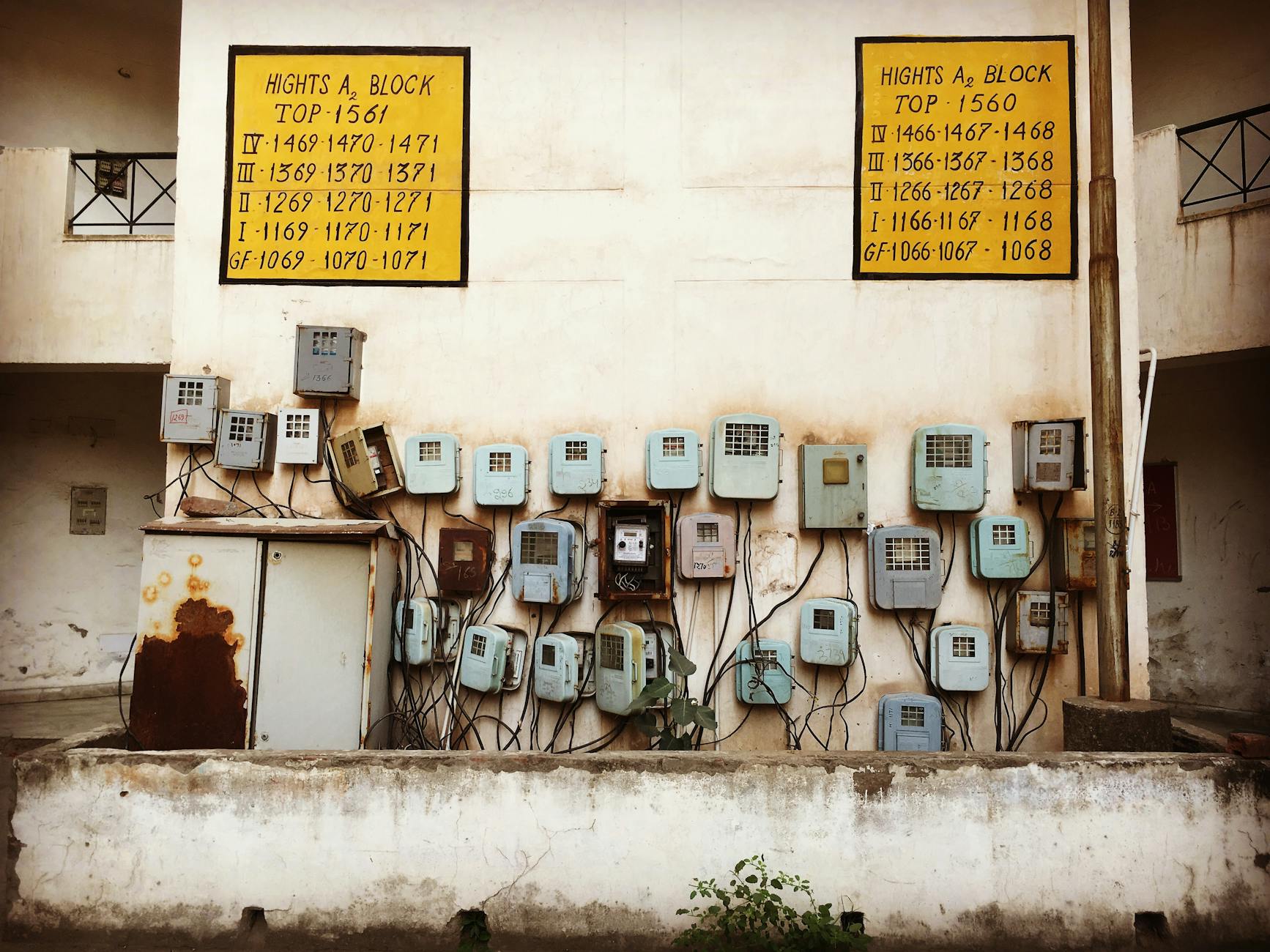
When you install a net-metered solar system, TANGEDCO replaces your existing single-direction meter with a bi-directional (import/export) meter. This is a digital meter that tracks electricity flowing in both directions.
What the Meter Records
| Reading | What It Means |
|---|---|
| KWh Import | Total units you drew from the TANGEDCO grid |
| KWh Export | Total units your solar system sent to the grid |
| Net (Import minus Export) | Your billable consumption |
The meter has an LCD display that cycles between import and export readings automatically. It is worth learning to read both values yourself — take a photo of the display before each billing cycle for your own records.
Key Facts About the Bi-Directional Meter
- TANGEDCO procures and installs the meter (you pay a meter cost of approximately Rs. 2,000 to Rs. 3,000)
- The meter is sealed by TANGEDCO and should not be tampered with
- If the meter malfunctions or displays errors, report it to your section office immediately — without a functioning bi-directional meter, your exports will not be recorded and you will be billed at full consumption
For a complete breakdown of every field on your TANGEDCO bill and how solar changes it, read our guide to understanding your TANGEDCO EB bill.
The Billing Cycle and Settlement Process
TANGEDCO bills most domestic consumers on a bi-monthly (once every two months) cycle. Here is how billing works after net metering is activated:
Step-by-Step Billing Process
- Meter reading: A TANGEDCO meter reader visits your premises and records the import and export readings from your bi-directional meter
- Net calculation: TANGEDCO subtracts your export units from your import units
- Bill generation: If net consumption is positive (you imported more than you exported), you are billed based on the applicable TANGEDCO tariff slab for those net units
- Credit carry-forward: If net consumption is negative (you exported more than you imported), the surplus units carry forward as credit to your next billing cycle
- Fixed charges: Regardless of net consumption, you pay minimum fixed charges (Rs. 30 to Rs. 50 per month depending on your connection type)
Annual Settlement (March 31)
At the end of each financial year, TANGEDCO performs an annual settlement of any accumulated export credits:
| Situation at Year-End | What Happens |
|---|---|
| You have accumulated export credits | Credits are paid out at the APPC rate (Rs. 3.50 to Rs. 4.00 per unit) |
| You have no accumulated credits | Nothing — you have already been billed for net imports throughout the year |
Why this matters: The APPC (Average Pooled Purchase Cost) rate is significantly lower than the retail tariff you pay for consumption. Units credited 1:1 during the year might save you Rs. 3 to Rs. 8 per unit (depending on your slab), but units settled at year-end are worth only Rs. 3.50 to Rs. 4.00. This is why right-sizing your system to match your annual consumption is critical. Use our Solar Savings Calculator to find the right system size for your household.
Real Example: Mr. Rajan's 5 kW System in Coimbatore
Let us walk through a complete year for a real-world scenario to see how net metering works in practice.
Profile:
- Name: Mr. Rajan, a homeowner in Saravanampatti, Coimbatore
- System size: 5 kW rooftop solar (on-grid)
- Average monthly consumption (before solar): 500 units
- Bi-monthly TANGEDCO bill (before solar): Approximately Rs. 5,000 to Rs. 6,000
- Connection type: LT2A (Single Phase Domestic)
Month-by-Month Generation vs. Consumption
| Month | Solar Generation (units) | Grid Import (units) | Grid Export (units) | Self-Consumption (units) | Net Consumption (units) | Carry-Forward Credit |
|---|---|---|---|---|---|---|
| January | 550 | 250 | 300 | 250 | -50 | 50 |
| February | 600 | 220 | 320 | 280 | -100 | 150 |
| March | 650 | 200 | 350 | 300 | -150 | 300 |
| April | 680 | 230 | 410 | 270 | -180 | 480 |
| May | 660 | 320 | 380 | 280 | -60 | 540 |
| June | 580 | 300 | 280 | 300 | +20 | 520 |
| July | 540 | 310 | 250 | 290 | +60 | 460 |
| August | 560 | 290 | 260 | 300 | +30 | 430 |
| September | 580 | 280 | 270 | 310 | +10 | 420 |
| October | 520 | 320 | 240 | 280 | +80 | 340 |
| November | 480 | 340 | 220 | 260 | +120 | 220 |
| December | 500 | 300 | 250 | 250 | +50 | 170 |
| Full Year | 6,900 | 3,360 | 3,530 | 3,370 | 170 |
Reading the table: In January, Mr. Rajan's panels generate 550 units. He uses 250 units directly from the panels during the day (self-consumption) and exports 300 units to the grid. At night and on cloudy hours, he imports 250 units from the grid. Net consumption = 250 imported minus 300 exported = -50 units. Those 50 surplus units carry forward as credit.
Mr. Rajan's Annual Bill Summary
Without solar (estimated annual cost):
| Bi-Monthly Period | Consumption (units) | Approximate Bill |
|---|---|---|
| Jan–Feb | 1,000 | Rs. 6,600 |
| Mar–Apr | 1,000 | Rs. 6,600 |
| May–Jun | 1,050 | Rs. 6,930 |
| Jul–Aug | 980 | Rs. 6,468 |
| Sep–Oct | 1,000 | Rs. 6,600 |
| Nov–Dec | 970 | Rs. 6,402 |
| Annual Total | 6,000 | Rs. 39,600 |
With solar and net metering:
In most billing cycles, Mr. Rajan's net consumption is zero or very low because his carry-forward credits offset any net imports. His bi-monthly bills drop to the minimum fixed charges of Rs. 60 to Rs. 100.
At the end of the financial year, his remaining 170 carry-forward units are settled at the APPC rate: 170 x Rs. 3.75 = Rs. 637 credited to his account.
| Item | Amount |
|---|---|
| Total annual bill without solar | Rs. 39,600 |
| Total annual bill with net metering | Rs. 600 to Rs. 800 (fixed charges only) |
| APPC settlement credit | Rs. 637 |
| Net annual savings | Approximately Rs. 39,000 |
Mr. Rajan's 5 kW system, after the PM Surya Ghar subsidy, cost him approximately Rs. 2.10 lakh. At Rs. 39,000 annual savings, his payback period is roughly 5.4 years — and the panels will produce power for 25+ years.
For more on reducing your electricity bill in Tamil Nadu, including strategies that complement solar, see our detailed guide.
Gross Metering vs. Net Metering vs. Net Billing: What Is the Difference?
These three terms come up frequently, and they are often confused. Here is how they differ in the Tamil Nadu context:
| Feature | Gross Metering | Net Metering | Net Billing |
|---|---|---|---|
| What gets measured | Total generation (all solar output goes to grid) | Net difference between import and export | Import and export measured separately |
| Self-consumption | Not applicable — all power goes to grid | Yes — you use solar directly, export surplus | Yes — you use solar directly, export surplus |
| Export credit rate | Feed-in tariff (set by TNERC) | 1:1 at retail tariff rate | Lower feed-in rate (APPC rate) |
| Who benefits most | Large generators, ground-mount plants | Homeowners and small businesses | DISCOMs (lower payout to consumers) |
| Used in TN for | Solar parks, large ground-mount projects | Residential rooftop up to 10 kW | Larger commercial systems (above threshold) |
| Typical homeowner savings | Not applicable to residential | Highest — 70% to 90% bill reduction | Moderate — 50% to 70% bill reduction |
For Tamil Nadu homeowners installing systems up to 10 kW, net metering is the applicable mechanism under current TNERC regulations. This is the most financially advantageous option available. For a thorough comparison with worked billing examples, see our guide on net metering vs. net billing under TNERC 2026 rules.
If you are evaluating different system configurations, our comparison of on-grid, off-grid, and hybrid solar systems explains which setup works best with net metering.
The TANGEDCO Net Metering Application Process
Getting net metering approved involves a structured process through TANGEDCO. Here is what to expect.
Documents Required
Prepare the following before starting your application:
- TANGEDCO EB service connection details — your 11-digit consumer number and latest paid bill
- Aadhaar card of the connection holder (name must match the EB connection)
- Property ownership proof — property tax receipt, sale deed, or patta
- Building plan approval (if applicable in your local body jurisdiction)
- Solar system details — invoice from the installer, panel and inverter specifications, system layout diagram
- Installer credentials — MNRE-empanelled or TANGEDCO-approved vendor certificate
- Single-line diagram (SLD) of the electrical installation, prepared by your installer
- Undertaking/indemnity letter (format provided by TANGEDCO)
- Passport-size photographs of the applicant (2 copies)
Application Process and Timeline
| Step | Activity | Expected Timeline |
|---|---|---|
| 1 | Submit application with documents at your local TANGEDCO section office (or through the CEO portal online) | Day 1 |
| 2 | TANGEDCO verifies documents and checks for completeness | Day 1 to 7 |
| 3 | Site inspection by TANGEDCO engineer to verify installation | Day 7 to 15 |
| 4 | Technical approval from the Superintendent Engineer's office | Day 15 to 21 |
| 5 | Bi-directional meter procurement and installation | Day 21 to 30 |
| 6 | Net metering agreement signed between consumer and TANGEDCO | Day 28 to 30 |
| 7 | Grid synchronization — net metering officially begins | Day 30 |
Fees
- Application/processing fee: Rs. 500 to Rs. 1,000 (varies by section office)
- Bi-directional meter cost: Rs. 2,000 to Rs. 3,000 (one-time, payable to TANGEDCO)
- Agreement stamp paper: Rs. 100 to Rs. 200
- Total out-of-pocket for net metering activation: Approximately Rs. 3,000 to Rs. 4,500
CEO Portal (Online Application)
TANGEDCO's Chief Electrical Officer portal (accessible through the TANGEDCO website) allows online submission of net metering applications for some regions. The availability and functionality of the online portal varies — in many areas, the section office submission remains the more reliable route. Check with your installer about which method is currently functional in your TANGEDCO section.
For a detailed breakdown of the five most common mistakes that delay applications, read our guide on net metering delays and TANGEDCO application mistakes.
Common Problems and What to Do About Them
Solar installation is the easy part. The net metering approval process is where most homeowners encounter friction. Here are the most common issues and practical steps to resolve them.
Problem 1: Bi-Directional Meter Not Installed for Months
The situation: Your solar system is installed and commissioned, but TANGEDCO has not installed the bi-directional meter. Weeks turn into months. Meanwhile, your system is either sitting idle or exporting power to the grid for free (since your old unidirectional meter does not track exports).
What to do:
- Visit your local TANGEDCO section office in person and get a written acknowledgement of your application status
- If the delay exceeds 30 days, file a formal complaint through the TANGEDCO grievance portal
- Escalate to the Superintendent Engineer's office if the section office is unresponsive
- As a last resort, file a petition with the TNERC Consumer Grievance Redressal Forum — TANGEDCO is bound by regulatory timelines
- Keep copies of every document, application receipt, and complaint reference number
Problem 2: Meter Readings Disputed
The situation: Your bi-directional meter shows one set of readings, but the TANGEDCO bill reflects different numbers. This typically happens when meter readers record only the import reading and miss the export reading, or when the billing system does not correctly process bi-directional meter data.
What to do:
- Photograph your meter display every billing cycle — capture both the import and export readings with a timestamp
- Compare your photos against the readings printed on your bill (check the "Import" and "Export" fields under your EB bill's meter reading section)
- If there is a discrepancy, visit the section office with your photographs and request a correction
- If the section office does not resolve the issue within 15 days, escalate to the CGRF
Problem 3: Application Rejected Due to Document Issues
The situation: Your application is returned because of name mismatches (Aadhaar name differs from EB connection name), missing documents, or incorrect consumer category.
What to do:
- Get the name on your EB connection corrected at the section office before reapplying (this itself can take 1 to 2 weeks)
- Ensure your installer provides all technical documents in the exact format TANGEDCO requires
- Work with an experienced installer who has processed multiple net metering applications in your TANGEDCO section — they will know the specific requirements and preferences of the local office
Problem 4: System Generating Less Than Expected
The situation: Your net metering is active, but the export readings are much lower than your installer promised. Your bills are higher than projected.
What to do:
- Check your inverter's monitoring app — it shows actual daily generation data
- Compare against the generation estimate your installer provided (a 5 kW system in Coimbatore should generate 550 to 680 units per month depending on season)
- Common causes of underperformance: dirty panels, shading from new construction or tree growth, inverter faults, or wiring losses
- Clean your panels every 2 to 4 weeks — dust and bird droppings alone can reduce output by 5% to 15% in Tamil Nadu's climate
- If generation is significantly below expectations despite clean panels, have your installer inspect the system
Tips for Maximising Your Net Metering Benefits
-
Right-size your system: Match your solar capacity to your annual consumption. Over-sizing leads to excess credits settled at the lower APPC rate. Under-sizing means you are still paying high slab rates on the remaining consumption. Use our Solar Savings Calculator to find the optimal size.
-
Shift heavy loads to daytime hours: Run your washing machine, water heater, iron, and air conditioner between 10 AM and 3 PM when solar generation peaks. Every unit you consume directly from your panels is a unit you do not need to export and then import back.
-
Monitor your generation regularly: Most modern inverters come with a Wi-Fi-enabled monitoring app. Check it weekly to spot any drops in generation early.
-
Keep your panels clean: In Coimbatore and across Tamil Nadu, dust accumulation is a real issue. A simple water wash every 2 to 3 weeks maintains optimal output.
-
Understand your tariff slabs: Because Tamil Nadu uses a whole-slab (non-telescopic) billing structure, even a small reduction in net consumption can drop you into a dramatically lower slab. Knowing the exact slab boundaries helps you target the right system size.
Frequently Asked Questions
What is the minimum and maximum system size eligible for net metering in Tamil Nadu?
Under current TNERC regulations, the minimum system size for net metering is 1 kW and the maximum is 1 MW (though residential systems are typically capped at 10 kW or the sanctioned load, whichever is lower). For most homes, systems between 3 kW and 5 kW are the practical sweet spot, balancing cost, generation, and roof space.
How long does the entire process take from solar installation to net metering activation?
The official TANGEDCO timeline is 30 days from application submission to grid synchronization. In practice, the timeline ranges from 30 to 90 days depending on your TANGEDCO section office, document completeness, and meter availability. Working with an experienced installer who handles the paperwork significantly reduces delays. See our detailed guide on avoiding common application mistakes.
Can I get net metering if I live in an apartment or gated community?
Yes, but with conditions. For individual flats, net metering is typically applied to the common area connection (housing society level), not individual unit connections. Some gated communities install a shared rooftop system with generation credits distributed among residents. The process requires the housing society to apply through TANGEDCO with collective consent. Individual flat owners with exclusive roof access may apply independently, but this is uncommon.
What happens to my net metering if I sell my house?
The net metering agreement is tied to the TANGEDCO service connection, not to the individual. When ownership transfers, the new owner must update the EB connection name and request a transfer of the net metering agreement at the section office. The solar system and net metering benefits transfer with the property — in fact, having an active net-metered solar system increases the property's resale value.
Do I still need to pay anything on my TANGEDCO bill after installing solar with net metering?
Yes. Even if your net consumption is zero, you will pay minimum fixed charges (Rs. 30 to Rs. 50 per month depending on your connection type). You may also see small amounts for meter rent and fuel cost adjustment charges. Practically, most net-metered homes in Tamil Nadu see monthly bills between Rs. 50 and Rs. 150. A zero-rupee bill is not possible, but the savings compared to pre-solar bills are substantial.
Is net metering the same thing as "zero electricity bill"?
Not exactly, though it is close. Net metering reduces your bill to near-zero by offsetting consumption with solar generation. You will always pay the minimum fixed charges. The phrase "zero bill" is commonly used in solar marketing to mean your energy charges become zero — which is accurate for well-sized systems. The fixed charges remain. For a realistic picture of what your bill will look like after solar, our Solar Savings Calculator provides month-by-month projections based on your actual consumption data.
Next Steps
Net metering is what makes rooftop solar financially viable for Tamil Nadu homeowners. Without it, your excess daytime generation would go to the grid with no compensation. With it, the grid effectively becomes your battery — storing your surplus and returning it when you need it, unit for unit.
The key decisions are: choosing the right system size (to maximise 1:1 credits and minimise low-value annual settlement), working with an installer experienced in TANGEDCO net metering approvals (to avoid the delays that plague many applications), and acting while current TNERC regulations remain in effect (net metering at 1:1 rates is not guaranteed to last indefinitely).
If you are ready to explore solar for your home, get in touch with our team for a site assessment and a detailed savings projection based on your actual TANGEDCO consumption history.
Ready to Go Solar?
Get a personalized solar quote based on your electricity consumption and roof area.
Related Articles
TANGEDCO Solar Policy 2026 | Net Metering & Approval
TANGEDCO's 2026 solar rules decoded: net metering up to 10 kW, PPA tariff rates for HT consumers, which PM Surya Ghar installations TANGEDCO approves, and the exact timeline from application to grid connection.
New Tamil Nadu Rooftop Solar Subsidy 2026: Up to ₹1 Lakh Explained
The August 5, 2026 Tamil Nadu Budget announced a new state rooftop solar subsidy that stacks on top of PM Surya Ghar — taking the maximum combined support to ₹1,00,000 per home. Here's what was announced, what wasn't, and what it means for your payback.
Open Access Solar: Benefits for Commercial Users
Explore how open access solar can help commercial establishments reduce electricity costs significantly.