On This Page
Kangeyam is an agricultural town in the eastern part of Tirupur district, located approximately 45 km from Tirupur city on the Dharapuram-Erode road. The town is famous across India for the Kangeyam cattle breed — a robust draught breed historically used for ploughing and cart-pulling, and now prized for breeding and dairy purposes. The surrounding Kangeyam taluk is one of the most productive agricultural zones in Tirupur district, with extensive cultivation of coconut, groundnut, maize, cotton, and millets, supported by bore well irrigation and the Amaravathi canal system.
For Kangeyam's farmers, dairy operators, and residents, solar installation in Kangeyam, Tirupur offers a practical route to energy independence. Agricultural pump sets are the single largest electricity consumers in this taluk, often running 6-10 hours daily. Dairy farms with milking machines, refrigeration, and processing equipment also have substantial power needs. With Tirupur district's solar irradiance averaging 5.1-5.4 kWh/m2/day and Kangeyam's open, flat terrain providing unobstructed solar exposure, this area is exceptionally well-suited for both rooftop and ground-mounted solar installations.
Kangeyam's Property and Agricultural Profile
Agricultural Properties
Kangeyam taluk is defined by its agricultural character:
- Coconut and groundnut farms: The dominant crops, irrigated by bore wells with 5-10 HP pump sets consuming 500-1,500 units/month
- Cotton cultivation: Rain-fed and irrigated cotton fields — the raw material that feeds Tirupur's textile industry
- Maize and millet farming: Extensively cultivated in the drier zones, with lower irrigation requirements
- Integrated farming: Many farmers combine crop cultivation with dairy farming, poultry, and sericulture — each adding to electricity consumption
Dairy and Cattle Operations
Kangeyam's association with the famous Kangeyam cattle breed makes dairy a significant economic activity:
- Dairy farms: Operations ranging from small household dairies (5-15 cows) to medium-scale farms (50-200 cattle) with milking machines, bulk milk coolers, and fodder choppers
- Cattle breeding centres: Facilities dedicated to preserving and improving the Kangeyam breed, with lighting, ventilation, and water pumping needs
- Milk chilling centres: Cooperative and private chilling centres requiring continuous refrigeration — typically consuming 2,000-5,000 units/month
- Fodder processing: Chaff cutters, grinders, and mixers powered by 3-phase electric motors
Residential Areas
Kangeyam town has a modest but growing residential base:
- Town centre homes: Traditional houses near the market and bus stand area, with plots of 800-1,500 sq ft
- New residential extensions: Layouts on the Dharapuram road and Erode road with modern construction and plots of 1,200-2,400 sq ft
- Farm residences: Large homesteads on agricultural properties with ample roof and ground space
- Government housing: TNHB and Adi Dravidar welfare housing colonies with standard roof areas
TANGEDCO Procedures for Kangeyam
Kangeyam falls under the TANGEDCO Tirupur Distribution Circle.
Key TANGEDCO Offices
- Section Office: TANGEDCO Kangeyam Section Office, near Kangeyam bus stand
- Sub-Division: Kangeyam Sub-Division office
- Distribution Circle: Tirupur Electricity Distribution Circle (EDC)
- Superintending Engineer: Tirupur Region
Net Metering Process
- Application: Submit at the Kangeyam section office with system design documents, vendor credentials, and property ownership proof
- Feasibility study: TANGEDCO engineers inspect the site and verify transformer and grid capacity (15-30 days)
- Approval: Receive feasibility clearance
- Installation and commissioning: Complete the installation through the MNRE-registered vendor and submit test reports
- Net meter installation: TANGEDCO installs the bidirectional meter (30-60 days post-commissioning)
Kangeyam-Specific Notes
- Agricultural connections are the predominant connection type in Kangeyam taluk — these are eligible for solar pump installations under PM-KUSUM
- The rural grid in some parts of Kangeyam taluk experiences voltage fluctuations and power cuts (4-8 hours in summer) — hybrid systems with battery backup address this effectively
- For residential connections, the PM Surya Ghar scheme provides subsidies up to Rs 78,000 for a 3 kW system
- Dairy farms with commercial connections should apply for net metering under the commercial category
Costs and Savings
Kangeyam Solar Generation Potential
| Parameter | Kangeyam, Tirupur | Tamil Nadu Average |
|---|---|---|
| Annual irradiance | 5.1-5.4 kWh/m2/day | 4.8-5.1 kWh/m2/day |
| Average daily generation per kWp | 4.3-4.6 units | 3.8-4.2 units |
| Annual generation per kWp | 1,560-1,660 units | 1,380-1,500 units |
| Monsoon impact (Oct-Dec) | Mild (15-20% reduction) | Varies by region |
Kangeyam's flat terrain, low humidity, and distance from the Western Ghats ensure some of the highest solar generation figures in Tirupur district.
Residential System Costs and ROI
| System Size | Net Cost (after subsidy) | Monthly Generation | Monthly Savings | Payback Period |
|---|---|---|---|---|
| 3 kW | Rs 70,000-1,00,000 | 390-415 units | Rs 2,000-3,100 | 3-4 years |
| 5 kW | Rs 2,00,000-2,70,000 | 650-690 units | Rs 4,100-5,600 | 4-4.5 years |
| 8 kW | Rs 3,70,000-4,70,000 | 1,040-1,100 units | Rs 6,900-9,300 | 4-5 years |
| 10 kW | Rs 4,70,000-6,00,000 | 1,300-1,380 units | Rs 8,900-11,500 | 4-5 years |
Dairy Farm System Costs
| System Size | Approximate Cost | Monthly Generation | Monthly Savings | Payback Period |
|---|---|---|---|---|
| 5 kW (small dairy) | Rs 2,50,000-3,00,000 | 650-690 units | Rs 4,500-5,500 | 4-5 years |
| 10 kW (medium dairy) | Rs 5,00,000-6,00,000 | 1,300-1,380 units | Rs 9,100-9,660 | 4.5-5 years |
| 25 kW (large dairy/chilling) | Rs 12,50,000-15,00,000 | 3,250-3,450 units | Rs 22,750-24,150 | 4.5-5 years |
Solar Pump System Costs (PM-KUSUM)
| Pump Capacity | Total Cost | Farmer's Share (40%) | Subsidy (60%) | Daily Water Output |
|---|---|---|---|---|
| 3 HP | Rs 2,60,000 | Rs 1,04,000 | Rs 1,56,000 | 40,000-60,000 litres |
| 5 HP | Rs 3,80,000 | Rs 1,52,000 | Rs 2,28,000 | 70,000-1,00,000 litres |
| 7.5 HP | Rs 5,00,000 | Rs 2,00,000 | Rs 3,00,000 | 1,00,000-1,50,000 litres |
| 10 HP | Rs 6,50,000 | Rs 2,60,000 | Rs 3,90,000 | 1,40,000-2,00,000 litres |
Typical Kangeyam Dairy Farm Scenario
Scenario: Medium dairy farm with 50 cows, milking machine, bulk cooler, chaff cutter, monthly consumption 1,800 units on commercial tariff at Rs 7/unit, 10 kW rooftop system on cattle shed
| Parameter | Value |
|---|---|
| System cost | Rs 5,50,000 |
| Monthly generation | 1,350 units |
| Monthly savings | Rs 9,450 |
| Annual savings | Rs 1,13,400 |
| Payback period | 4.8 years |
| 25-year savings | Rs 28.3 lakh |
Area-Specific Considerations
Solar for Dairy Operations
Kangeyam's dairy sector presents unique solar applications:
- Milk chilling centres: Continuous refrigeration loads align well with solar — daytime generation directly offsets the heaviest cooling load (morning and afternoon milk collection). A battery backup system ensures uninterrupted chilling during power cuts
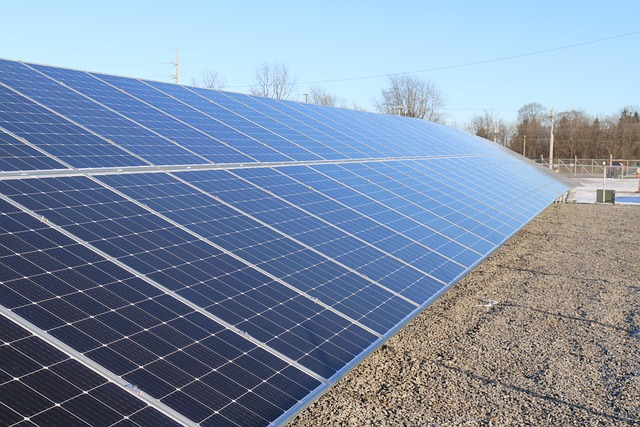
- Cattle shed rooftop mounting: The long, pitched roofs of modern cattle sheds provide excellent mounting surfaces. Panels also provide additional shade for the cattle below, reducing heat stress and improving milk yield
- Fodder processing: Chaff cutters and grinders are typically run during daytime hours, aligning perfectly with solar generation
- Water pumping: Dairy farms need large quantities of water for cattle drinking and shed washing — solar pumps can handle this requirement
Ground-Mounted Systems on Agricultural Land
Kangeyam's flat terrain and large agricultural land holdings make ground-mounted solar installations viable:
- Fallow or marginal land adjacent to farm buildings can host ground-mounted arrays without impacting productive cultivation
- Ground-mounted systems avoid roof structural concerns and can be optimally oriented for maximum generation
- Elevated ground-mount structures (6-8 ft height) allow continued use of the land below for shade-tolerant crops or cattle grazing
- Fencing and security measures are essential for ground-mounted systems in rural areas
Grid Reliability and Hybrid Systems
- Parts of Kangeyam taluk experience 4-8 hours of power cuts during peak summer (March-June)
- Dairy farms and milk chilling centres cannot afford power interruptions — hybrid solar with battery backup is strongly recommended
- Lithium-ion batteries (LiFePO4) are preferred for the hot Kangeyam climate as they tolerate higher temperatures better than lead-acid alternatives
- A 10 kW solar system paired with a 15-20 kWh battery bank provides 4-6 hours of backup for a medium dairy operation
Maintenance in Agricultural Settings
- Dust from unpaved farm roads and agricultural operations requires regular panel cleaning (every 2-3 weeks)
- Cattle and animal movement near ground-mounted systems necessitates proper fencing
- Bird droppings from poultry farms and cattle sheds can create hot spots on panels — quarterly inspection recommended
- Local cleaning and maintenance services are available through Tristar's Tirupur district team
Kangeyam Landmarks and Context
- Kangeyam Bus Stand and Market: Town centre with commercial properties suitable for rooftop solar
- Kangeyam Cattle Research Station: Located nearby, a point of reference for the town's dairy heritage
- Dharapuram Road: Southern approach with agricultural properties and emerging residential layouts
- Erode Road: Eastern approach connecting to Erode district, with farmland on both sides
- Vellakovil Road: Northern approach with cotton and groundnut farms
- Surrounding villages (Uttukkuli, Manakkadavu, Puliampatti): Agricultural hamlets with strong solar pump potential
Next Steps for Kangeyam Residents, Farmers, and Dairy Operators
Kangeyam's agricultural economy, thriving dairy sector, and excellent solar conditions create one of the strongest cases for solar adoption in Tirupur district. Farmers can eliminate pump set electricity costs, dairy operators can protect their operations from power cuts while saving lakhs annually, and homeowners can slash their electricity bills.
- Calculate your savings with our online tool — enter your monthly consumption for instant projections
- Request a free site assessment — our Tirupur district team will visit your farm, dairy, or home, assess solar potential, and provide a customised proposal
- Explore PM-KUSUM: Farmers with agricultural pump connections can access 60% government subsidy for solar pump systems
Tristar has deep experience with agricultural and dairy solar installations across Tirupur district. We manage the entire process from system design to TANGEDCO Tirupur approval and ongoing maintenance.
Ready to Go Solar?
Get a personalized solar quote based on your electricity consumption and roof area.
Related Articles
Solar Installation in Palladam, Tirupur: Cotton Mill Town Area Guide
Palladam is a historic cotton mill town in Tirupur district with growing residential areas and agricultural hinterland. Learn about solar installation for homes and mills, TANGEDCO procedures, costs, and savings.
Solar Installation in Udumalpet | Tirupur Agri Guide
Udumalpet sits in Tirupur district's agricultural belt near the Anamalai Hills with strong off-grid solar potential. Learn about solar installation for farms, homes, and rural properties, TANGEDCO procedures, and savings.
Solar Installation in Annur | Coimbatore Rural Guide
Annur is a semi-urban town near Karamadai on the northern outskirts of Coimbatore district with agricultural and residential properties. Learn about solar installation costs, TANGEDCO procedures, and savings.