On This Page
A solar system is one of the few purchases where the seller genuinely wants the product to keep working well for 25 years. But "low maintenance" doesn't mean "zero maintenance." Having serviced hundreds of systems across Tamil Nadu — from coastal Chennai humidity to Coimbatore's dusty industrial belt — I can tell you that the difference between an 80% and a 95% performing system almost always comes down to how well the owner monitors and maintains it. Here's everything you need to know to keep your system at its best.
Why Maintenance Matters More in Tamil Nadu
Tamil Nadu's climate presents specific maintenance challenges:
- Dust and particulate: Red soil dust near Tirupur, industrial particulate near SIPCOT zones, and sea salt near coastal districts coat panels rapidly
- Monsoon debris: Leaves, bird droppings, and biomass accumulate during and after the northeast and southwest monsoons
- High temperatures: 45°C+ ambient temperatures stress inverter components and accelerate cable insulation ageing
- Salinity: Coastal installations in Chennai, Pondicherry, and Rameswaram face accelerated corrosion on mounting hardware and junction boxes
Understanding these local stressors helps you build a maintenance schedule that actually protects your investment.
Daily Monitoring: Your First Line of Defence
Modern inverters provide real-time generation data through smartphone apps. Every system you install today should be monitored daily, even if only for 30 seconds.
Recommended monitoring apps:
- Growatt: ShinePhone app (widely used across Tamil Nadu residential and commercial)
- Deye/Sunsynk: SolarmanPV app
- Fronius: Solar.web portal
- SolarEdge: SolarEdge monitoring portal (module-level data)
- Solis: SolisCloud app
What to look for daily:
- Today's generation vs the same day last week (accounting for weather)
- Peak power achieved — should approach your system's rated capacity on clear days
- Any error or warning indicators on the app dashboard
A drop of more than 10% from your established seasonal baseline on a clear day is a signal to investigate — don't wait to see if it "fixes itself." In our experience, most generation drops that owners ignore for weeks turn out to be simple soiling or a tripped isolator switch, not a panel failure. Catching it early means minimal lost generation.
Monthly Visual Inspection Checklist
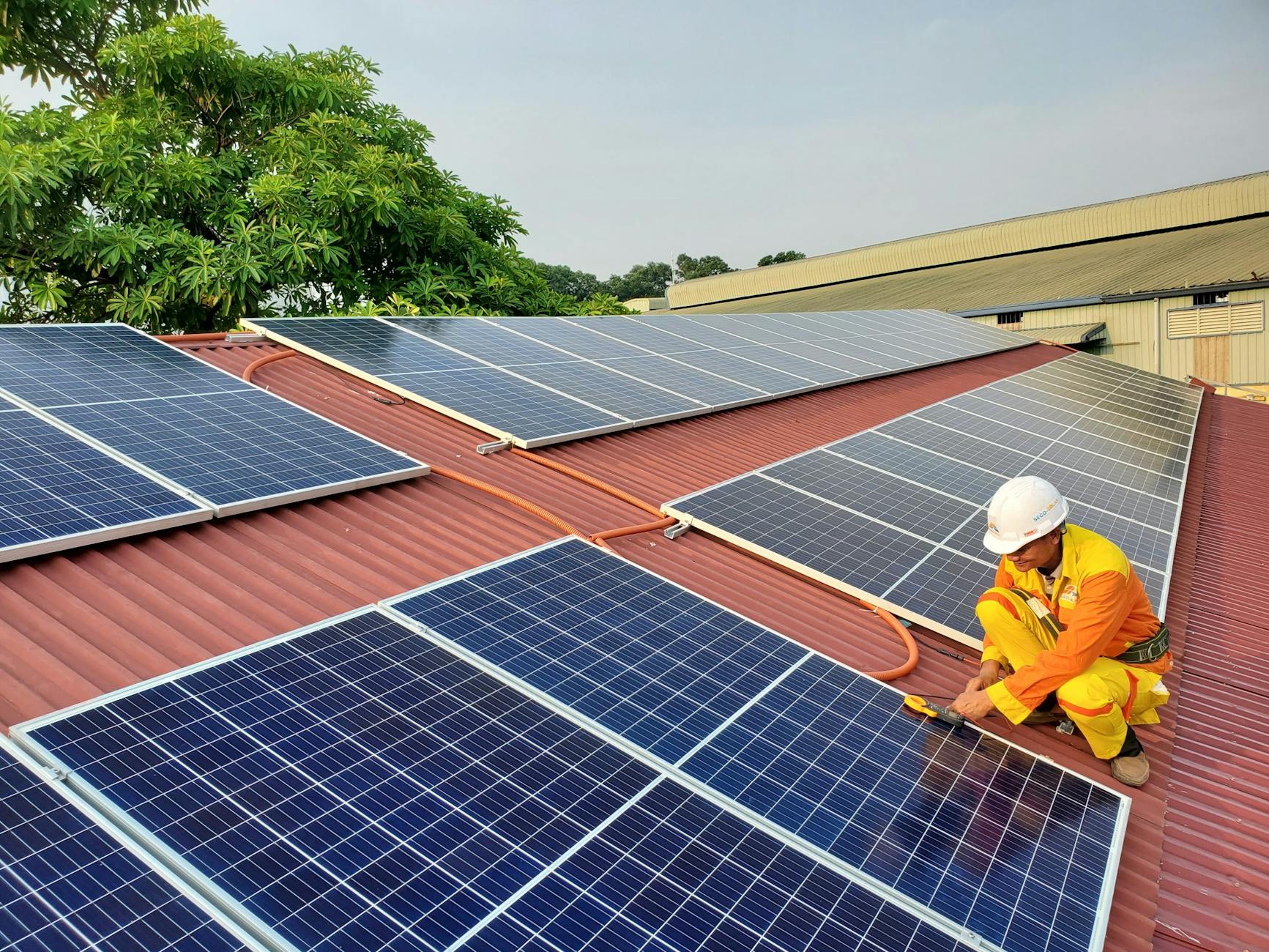
Once a month, walk your roof and spend 10–15 minutes checking the following. Early morning or late evening is safest — avoid the roof during peak heat hours.
Panel Surface Inspection
- Soiling and dust buildup — visible layer of red dust, bird droppings, or leaf debris
- Cracks or microcracks — visible fracture lines in the cell, usually appearing as dark lines through the blue/black cell surface
- Delamination — bubbling or separation between the glass and encapsulant layer
- Discoloration — yellowing or browning of the encapsulant (indicates moisture ingress or EVA degradation)
- Hot spots — dark patches on individual cells (best detected with a thermal camera; note if certain cells appear distinctly darker)
- Bird nesting — underneath panels on flat or low-tilt mounts, especially common in Tamil Nadu's urban areas
Mounting and Racking
- All mounting bolts and clamps visually intact — no visible loosening or rust staining
- Racking structure not deformed by wind or load events
- Panel frame corners intact, no cracking at mounting points
Cable Management
- DC cables routed through conduit or UV-protected cable trays — UV-rated cables (rated TUV/UL 4mm² or 6mm² DC solar cable) only
- No exposed cable runs in direct sunlight without UV-rated conduit
- MC4 connectors firmly seated, no corrosion visible at connection points
- No rodent damage to cable insulation (a common issue in ground-floor commercial installations)
Cleaning Schedule and Technique
In Tamil Nadu, the optimal cleaning schedule depends on your location:
| Zone | Recommended Cleaning Frequency |
|---|---|
| Urban / residential (Coimbatore, Chennai) | Every 2–3 weeks |
| Industrial / high-dust (Tirupur, SIPCOT, highway adjacent) | Weekly |
| Coastal (within 5 km of coastline) | Weekly (salt film accumulates rapidly) |
| Dry season (January–June) | Increase frequency by 30–50% |
| Post-monsoon | Clean immediately after rains stop (dried mud film) |
Safe cleaning technique:
- Clean early morning before the panels heat up — thermal shock from cold water on hot glass can cause micro-cracks
- Use soft water where possible (avoid hard bore water that leaves mineral deposits)
- Apply water with a soft-bristle brush or microfibre mop on an extension pole — no harsh scrubbing
- Do not use detergents unless specifically approved by your panel manufacturer; soap residue attracts dust faster
- Never use high-pressure jets directly on panel surfaces or junction boxes
- Wipe connectors and frame edges dry after cleaning in coastal locations
Inverter Monitoring and Warning Lights
Your inverter is the most electronically complex component and the most likely to generate fault codes. Common warning states to understand:
| Indicator / Code | Likely Meaning | Action |
|---|---|---|
| Grid fault / over-voltage | Grid voltage outside acceptable range (TANGEDCO fluctuation) | Wait — often self-clears. Persistent: call technician |
| Isolation fault / ground fault | Insulation failure in DC circuit | Do not reset — call technician immediately |
| Over-temperature | Inverter body exceeding thermal limit | Check ventilation clearance; clean air vents |
| MPPT input voltage high | DC open-circuit voltage too high (cold morning) | Usually self-clears; check string configuration if persistent |
| No grid / anti-islanding | Grid disconnected, inverter shut down for safety | Restore grid supply; inverter will restart automatically |
| Communication fault | WiFi dongle or RS485 disconnected | Check dongle and router; re-pair if needed |
Inverter ventilation clearance: Ensure a minimum 20 cm clearance on all sides of the inverter (manufacturer specifications vary — check your manual). Inverters mounted in poorly ventilated electrical rooms in Coimbatore's summer heat regularly trip on over-temperature, causing hours of lost generation per day.
DC Isolators, String Combiner Boxes, and Earthing
DC isolators (also called DC disconnect switches) should be operated and inspected during your annual service:
- Switch should operate smoothly with no sparking
- Contacts should show no discoloration or burning marks
- Housing should be fully sealed (IP65 minimum) with no moisture ingress
String combiner boxes (for larger systems above 20 kWp):
- Check fuse ratings match design specifications
- Inspect for moisture, corrosion, or insect ingress
- Verify string fuses are all intact
Earthing and bonding:
- All panel frames must be bonded to the earthing system
- Earth continuity should be verified with a multimeter annually
- Earth rods should be re-wetted in dry season in red-soil zones (earthing resistance degrades when soil dries out)
- A failed earth bond is both a safety hazard and a common cause of ground fault alarms
Junction Box Integrity
Each panel has a junction box on the rear — typically IP67 or IP68 rated. In coastal Tamil Nadu and post-monsoon inspections, check that:
- Junction box covers are fully sealed
- No moisture or condensation visible inside any translucent-covered boxes
- Bypass diodes (inside the junction box) have not burned through — a burned diode often leaves a visible scorch mark on the rear of the panel
Tracking Seasonal Production Baselines
Build a simple spreadsheet tracking monthly generation (kWh) from your inverter app. In Tamil Nadu, expected seasonal patterns:
- March–June: Peak generation (high irradiance, long days) — your highest months
- July–September: Southwest monsoon — generation drops 20–35% due to cloud cover
- October–November: Northeast monsoon — continued reduction
- December–February: Good clear-sky generation, lower than summer peak
Deviations from your established baseline — particularly below-expected generation during clear-sky months — are your clearest signal of a system issue requiring investigation.
When to Call a Certified Technician
Do not attempt to diagnose or fix the following yourself:
- Arc fault detected (error on inverter display or app)
- Ground fault / isolation failure — indicates insulation breakdown in the DC circuit
- Physical damage to panels — cracked glass, exposed cells
- Burning smell from inverter or combiner box
- Any persistent error code that doesn't clear after a standard inverter restart
- Inverter output power more than 20% below expected on a clear day after cleaning
All DC solar circuits operate at high voltage (typically 300–600V DC for residential strings, up to 1000V DC for commercial). DC arc faults are more dangerous than AC faults because DC current doesn't cross zero. Treat all DC wiring as live at all times.
Keeping Your Documentation Safe
Store the following documents in a waterproof folder or digital backup:
- Installation completion certificate and single-line diagram
- TANGEDCO net meter approval letter and consumer number
- Panel model datasheets and serial numbers (photograph labels on each panel during installation)
- Inverter warranty card and serial number
- Earthing test certificates
These documents are essential for warranty claims and any future TANGEDCO tariff inspections.
Warranty Claim Process
If a panel or inverter develops a confirmed fault:
- Document the fault with photos and inverter data screenshots
- Contact your installer first — most manufacturer warranties are claimed through the installing company
- The manufacturer will typically conduct a site inspection or request the faulty component be returned for testing
- Keep all original purchase invoices — warranty claims without proof of purchase are routinely rejected
For the complete annual maintenance framework, see our Tristar Maintenance Checklist.
Tristar Green Energy Solutions in Coimbatore offers annual maintenance contracts (AMC) for all system sizes across Tamil Nadu. Our service includes thermal imaging inspection, electrical safety testing, inverter firmware updates, and a full performance report. Contact us at /contact to discuss an AMC for your system and ensure your investment keeps delivering for the next 25 years.
Ready to Go Solar?
Get a personalized solar quote based on your electricity consumption and roof area.
Related Articles
Solar Maintenance Checklist | Tristar 25-Year Guide
A well-maintained solar system generates 15-20% more energy over its lifetime than a neglected one. Follow Tristar's comprehensive maintenance framework — monthly, quarterly, and annual tasks — to ensure your system delivers peak performance for 25 years.
Solar Panels During Cyclone Season: Protection Guide for Coastal TN
Living on Tamil Nadu's coast means cyclone preparedness is essential. Learn how to protect your solar panels during cyclone season, what wind ratings matter, and insurance considerations.
Solar Inverter Noise: Fan vs Electrical Faults Guide
Strange sounds from your solar inverter can indicate anything from a dusty fan to a serious electrical fault. Learn to identify normal vs abnormal inverter noises, common error codes, and when to call a professional.